Not every operation is racing. Plenty are simply out of room, a steady order profile, a range that keeps growing, and a building that is not getting any bigger. Instead of buying throughput you do not need, you buy storage you do, and the cost per stored tote falls.
How it is built
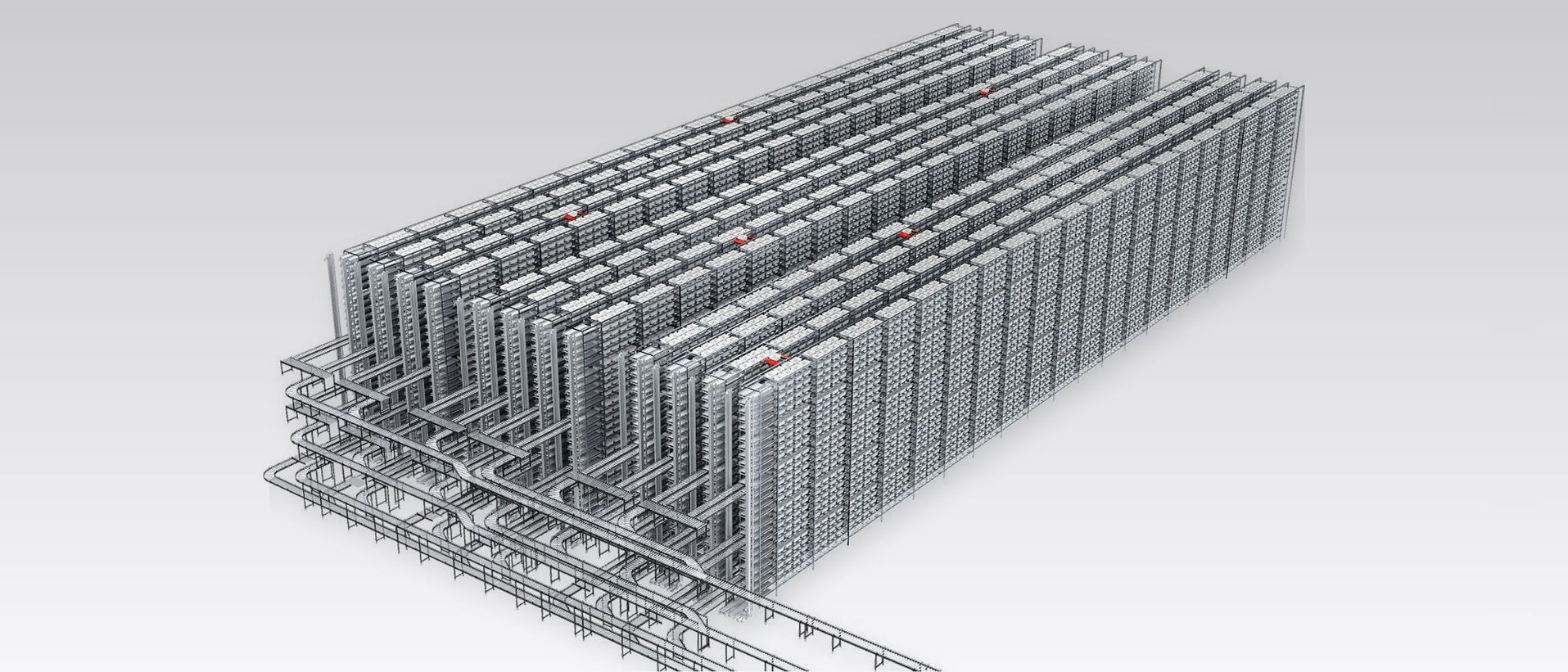
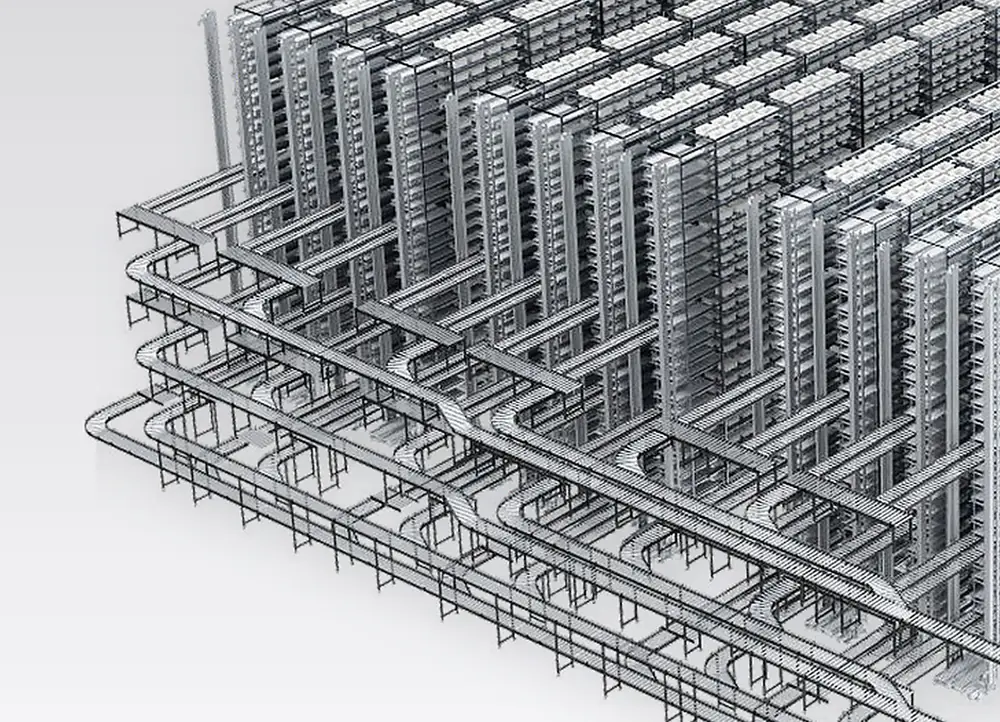
The whole system
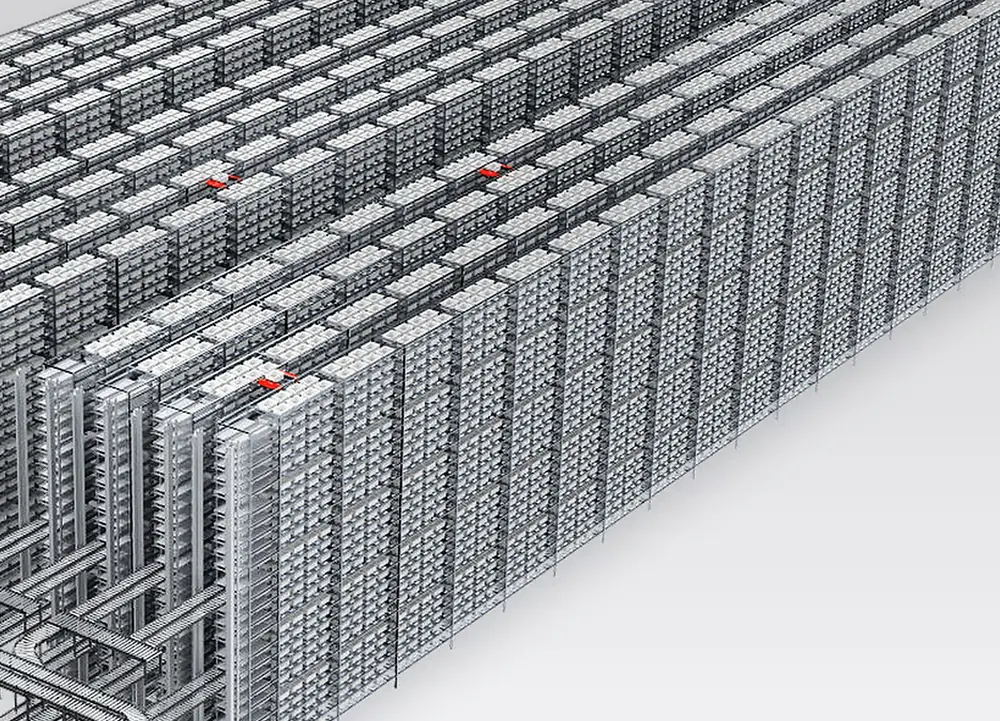
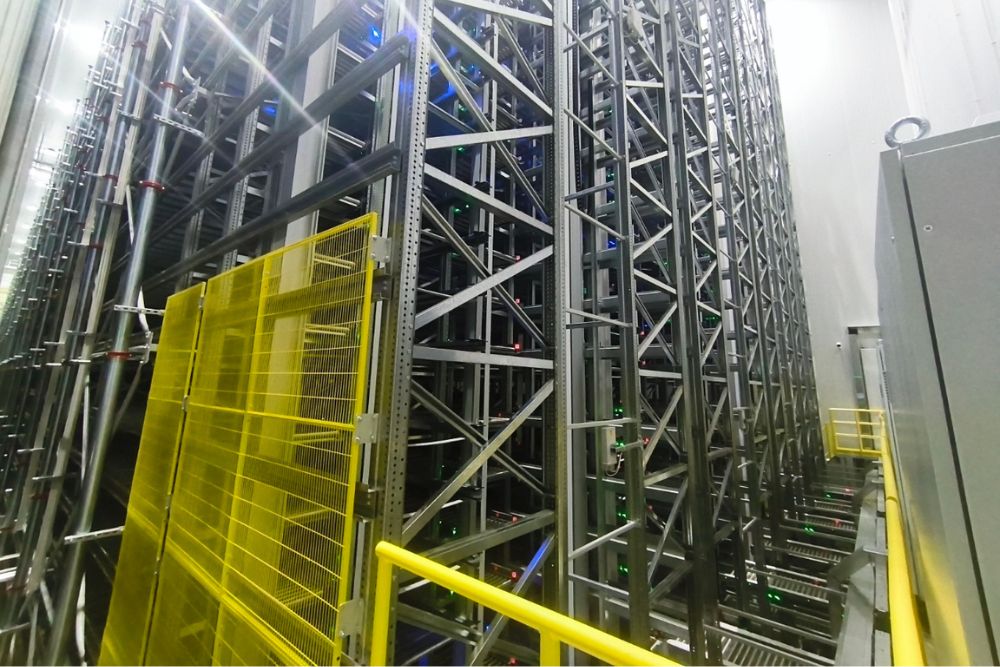
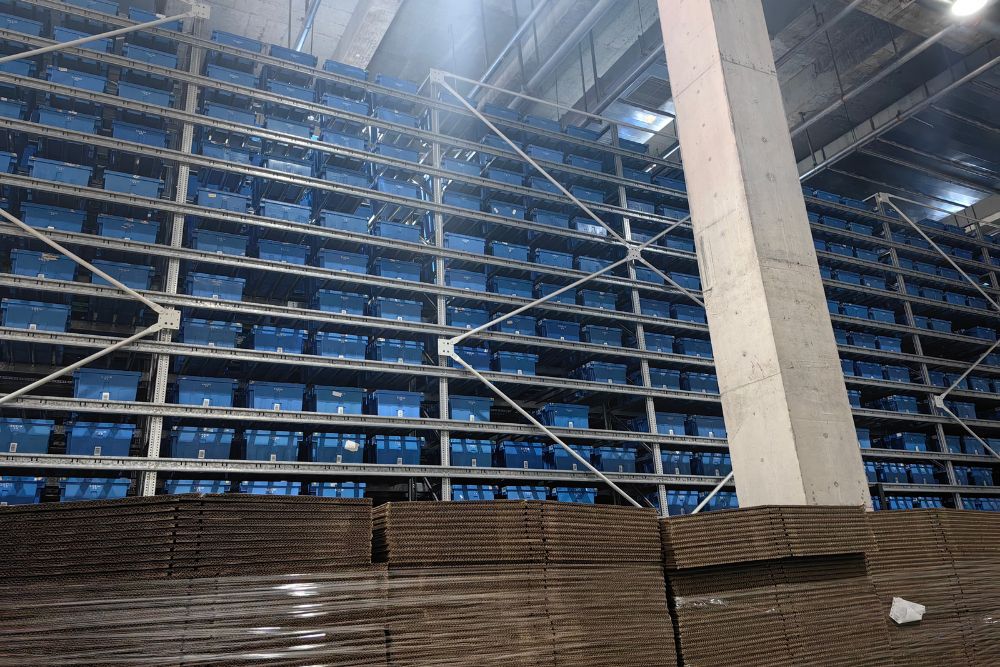
Storage rack
Multi-level racking uses the full building height, capacity grows upward instead of outward.
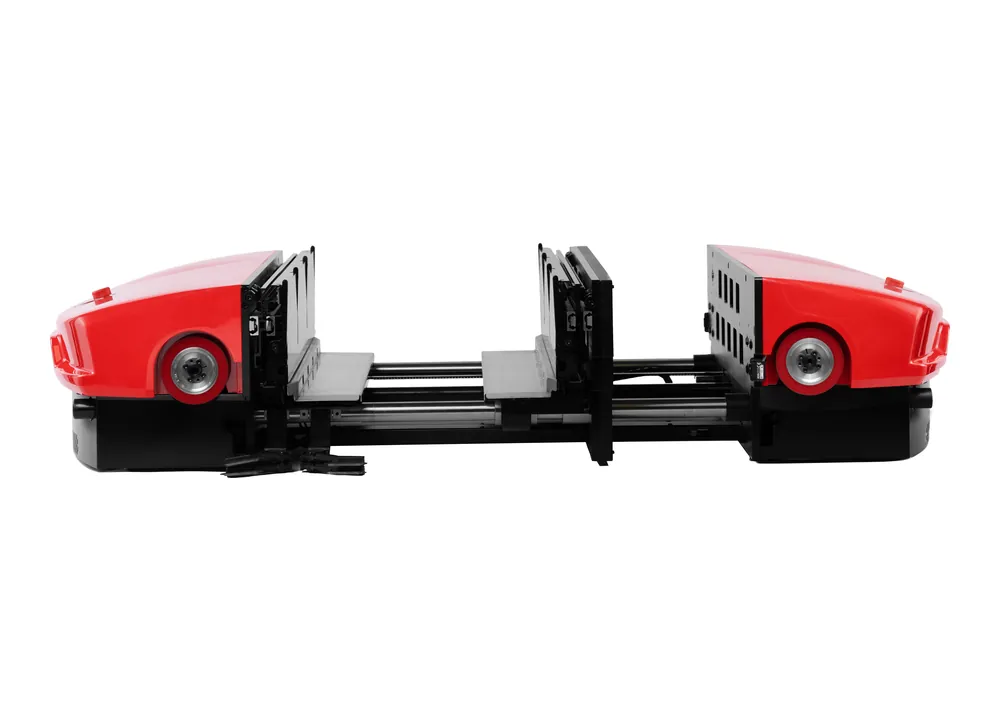
Tote shuttle
One shuttle per level runs storage and retrieval in parallel, at up to 6 m/s.
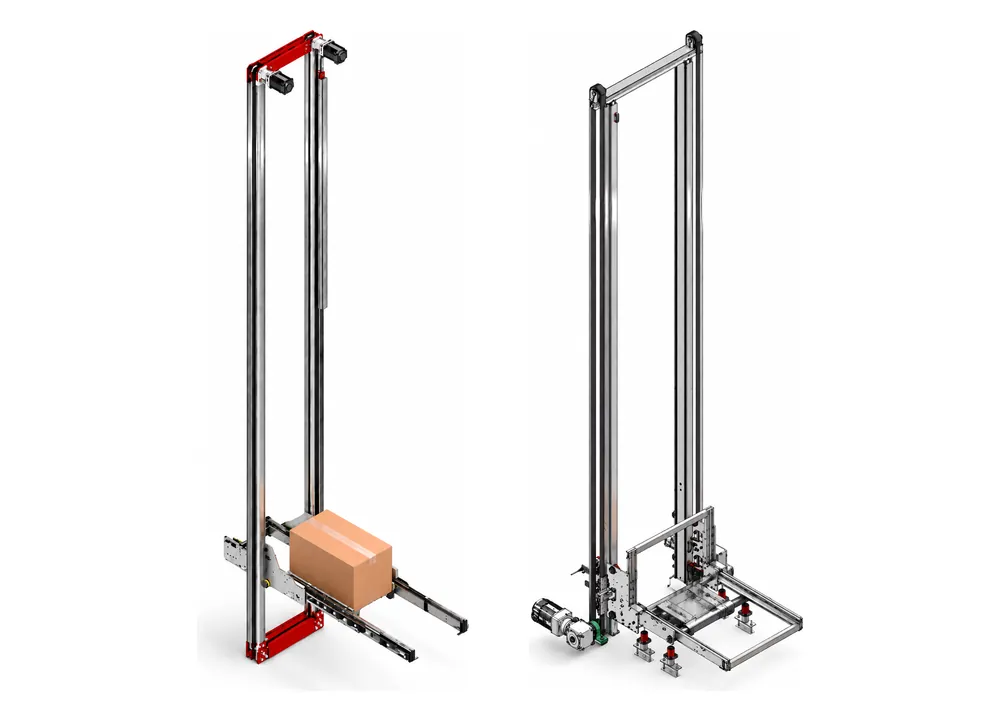
Tote lifts carry goods between levels and the conveyor. Shuttle lifts move shuttles between levels.
Conveyor line
Continuous lines link the lifts to workstations, inbound and outbound, so totes never wait for a manual handoff.
How it works
From inbound to outbound
A high-throughput system is a rack, a shuttle on every level, two kinds of lift and a station where the operator stands. Rate is decided by how well those four are balanced against each other, a fast shuttle behind a slow lift is a fast shuttle waiting.
01
High-density storage
fully utilizes warehouse height for greater capacity in a limited footprint
02
Parallel shuttle operation
multiple shuttles work simultaneously to boost storage/retrieval throughput
03
Continuous conveying
seamless warehouse-to-conveyor handoff cuts manual transport and wait time
04
Flexible AMR transport
Robots carry totes between storage and workstations, with no fixed conveyor in between
case studies
High-density case studies
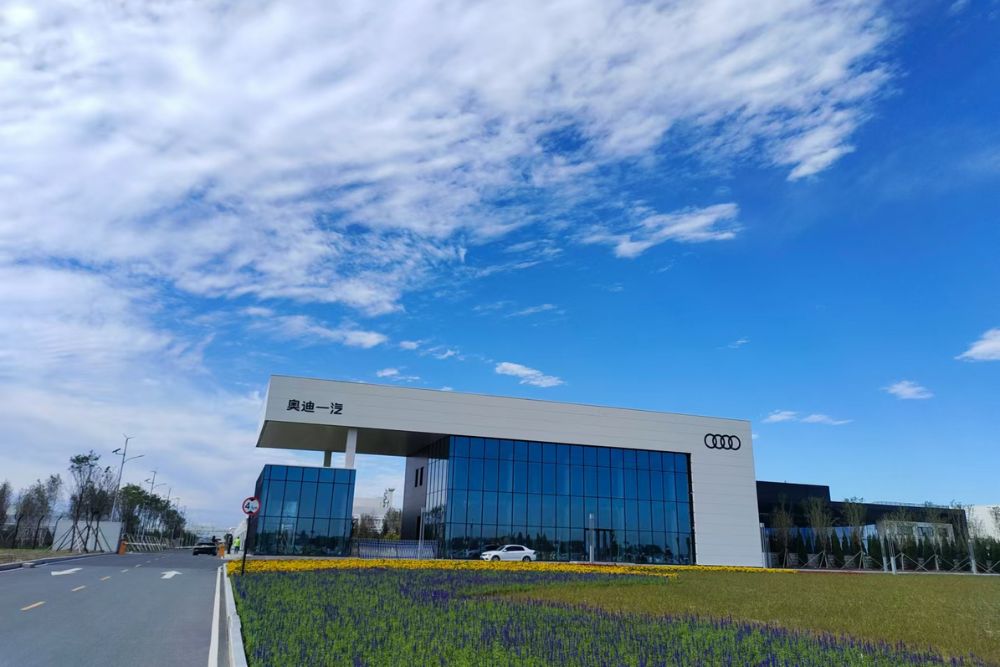
Client cases where the range outgrew the building before the volume did, how we fitted more into the same footprint, and the numbers that made it worth doing.