


Automated Storage and Retrieval Systems, Explained From First Principles
Most failed automation projects were not bought badly. They were architected badly. An automated storage and retrieval system is not a product you select off a datasheet, it is a decision about how material moves through a building: machines that store and retrieve loads so that no operator walks or drives to the goods. Change that architecture and you change the labour model, the building footprint and the capital plan all at once.
This guide is written for three readers. Buyers sizing a project and trying to work out what they are actually committing to. Engineers specifying one, who need to know where the physics bites. And students learning the field, where most published material stops at materials handling taxonomy.
Everything that follows returns to two numbers: storage density and sustained throughput. Get those right and the rest is detail.
What an Automated Storage and Retrieval System Is
An automated storage and retrieval system is a combination of fixed racking, automated load-handling machines and control software that stores and retrieves defined unit loads under software direction. The operator stays stationary at a workstation and the goods move to them. Nothing is driven, walked or searched for manually.
What makes a system automated rather than mechanised
The dividing line in the asrs meaning is decision authority, not horsepower. A powered pallet mover is mechanised: a human decides where the load goes. In an ASRS, the control software holds the location record for every load, selects the destination, sequences the moves and reports completion back to the WMS or ERP. Remove the software and the hardware has nothing to do. That distinction matters more than machine speed when you compare quotes.
Pallets, totes and trays: picking the unit of handling
The first specification decision is the unit load: pallet, tote, carton or tray. It fixes rack pitch, machine class, lift capacity and throughput ceiling before any other variable is set. Pallet shuttle systems and tote shuttle systems share a design logic but are not interchangeable, and retrofitting one into geometry built for the other is rarely economic.
What an ASRS is not
Conveyor transports but does not store. Forklifts and floor-driving mobile robots move loads without owning the storage structure. Crane-based unit-load installations from the 1960s, documented in most material handling histories, set the template. Anyone asking what is ASRS should start from what warehouse automation means more broadly.
The Main Types of ASRS and What Each One Is Built For
ASRS systems divide into a handful of mechanical families, and each one exists because of a specific combination of load weight, lane depth and required cycles per hour. Novelty is a poor selection criterion. The load profile is the real one.
Unit-load stacker cranes
A single mast running a fixed aisle, serving tall single-deep or double-deep pallet racking. Suited to heavy unit loads, high bays and moderate cycle rates per aisle. Throughput scales by adding aisles, which means cranes get expensive quickly when you need cycles rather than height.
Pallet shuttles and deep-lane storage
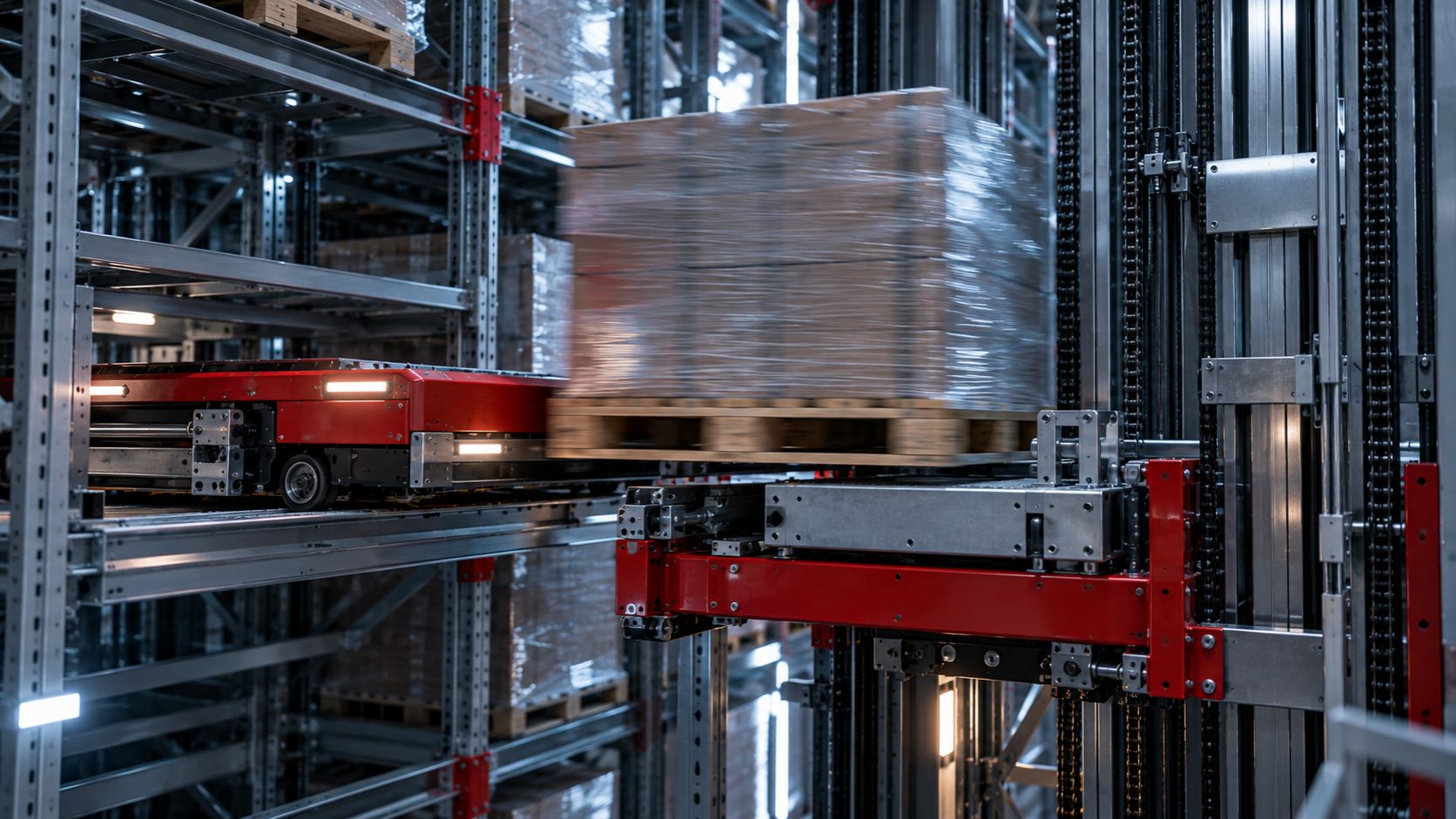
Shuttles live inside the rack grid and travel the lane, decoupling horizontal travel from vertical travel. This is the answer when lanes are deep, SKU counts are moderate and density matters more than random access to every pallet. Semi-automated, automated and three-dimensional configurations behave very differently in practice, which is why the types of pallet shuttle systems deserve separate evaluation.
Mini-load cranes and tote shuttles
Both handle cases, totes and trays. A mini-load crane serves one aisle with one device. A tote shuttle system puts a vehicle on each level, so cycles per hour rise with the number of levels rather than the number of aisles. For high-volume order picking operations, that difference decides the design.
Cube storage, carousels and vertical lift modules
Cube grids stack totes without aisles and trade retrieval speed for extreme density. Horizontal carousels and vertical lift modules serve small parts in small footprints, excellent for slow movers, limited at scale.
ASRS Types Compared on Load, Density and Throughput
Read this table as a shortlisting tool, not a specification. The payload and density figures are indicative industry ranges, not vendor claims, and throughput character matters more than peak numbers: it tells you whether the constraint sits with the shuttle, the lift or the aisle machine.
| System type | Load handled | Indicative payload | Storage density | Throughput character | Lane depth suitability | Best-fit application |
|---|---|---|---|---|---|---|
| Pallet shuttle (in-rack) | Pallets, slip sheets | 1,000 to 1,500 kg | Very high | Dual-cycle capable, lift-limited at aisle ends | Deep lanes, 10 to 40+ positions | Cold store, beverage, few SKUs, high volume |
| Unit-load crane | Pallets | 1,000 to 2,000 kg | High, single or double deep | Crane-limited, dual-cycle with twin forks | Single to double deep | Tall buildings, many pallet SKUs |
| Mini-load crane | Totes, cases, trays | 50 to 100 kg | Medium to high | Crane-limited per aisle | Single to double deep | Spare parts, slower-moving small goods |
| Tote shuttle (multi-level) | Totes, cartons | 25 to 50 kg | High | Lift-limited, scales with shuttle count | Single to multi-deep | E-commerce and 3PL goods-to-person picking |
| Cube or grid storage | Bins | 30 to 35 kg | Highest per cubic metre | Robot-limited, digging penalty on deep stacks | Stacked, not lane-based | Small parts, low ceiling, slow-moving inventory |
| VLM and carousel | Trays | 250 to 700 kg per tray | Medium, footprint-efficient | Single-cycle, one operator per unit | Not applicable | Point-of-use storage, kitting, MRO |
The pattern is consistent: density comes from depth, and depth costs you handling moves. Deep-lane pallet shuttles and cube grids win on cubic efficiency but pay a retrieval penalty on mixed SKU profiles. Crane systems hold throughput per aisle flat regardless of fleet size, while shuttle systems let you buy throughput incrementally until the lift saturates.
How an ASRS Moves a Load From Dock to Pick Face
The hardware is the visible half of the system. The decision layer is where projects succeed or fail.
The physical components of a working system
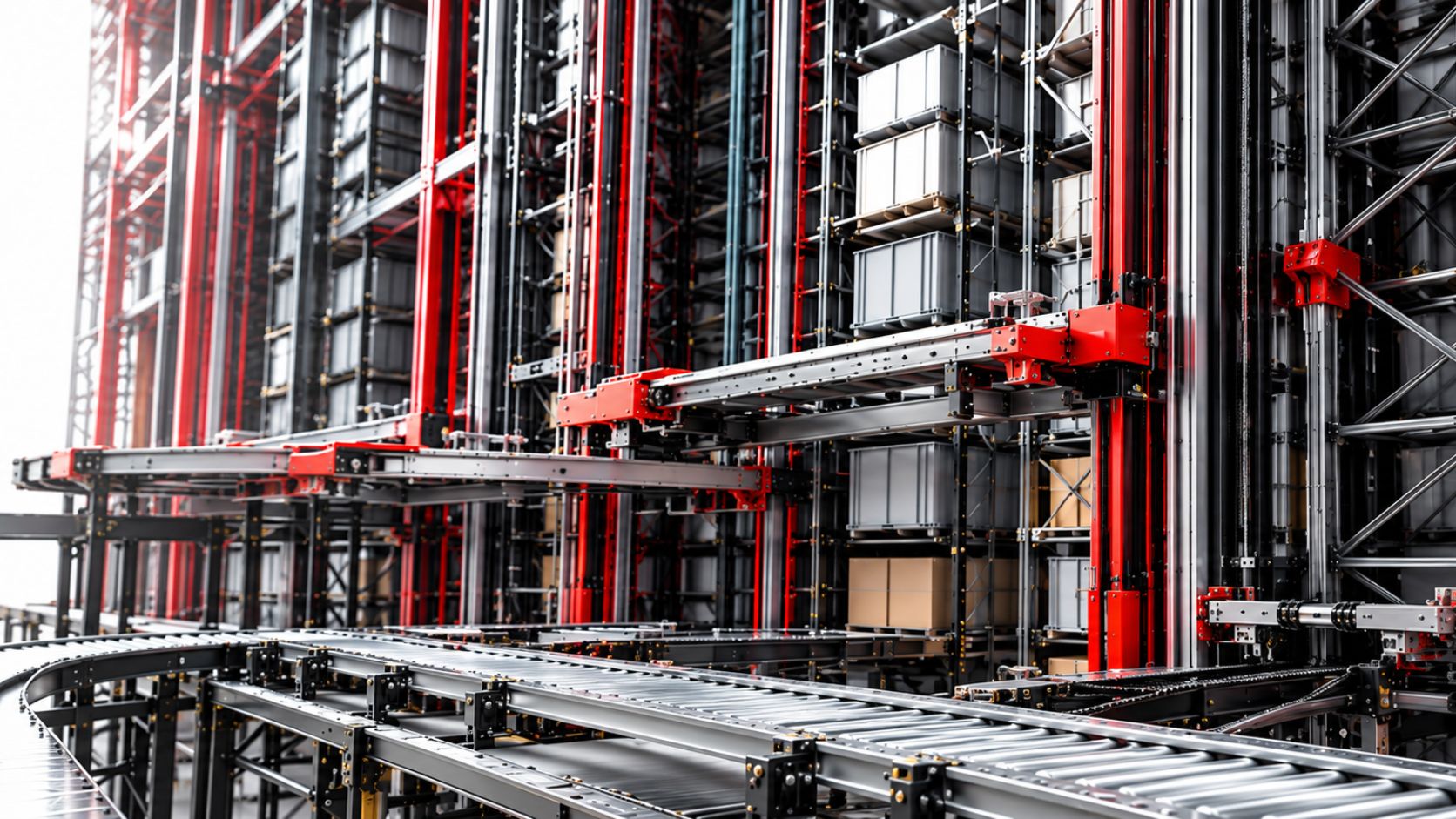
- Inbound conveyor or infeed station with a profiling gate: barcode or RFID read, dimensioning, weight check and rejection of out-of-tolerance loads
- Vertical lifts that decouple floor level from storage level
- Shuttles or cranes that handle the horizontal move inside the rack
- The rack structure itself, which is both the storage medium and the running surface
- Pick stations, outbound lanes and buffer sequencing positions at the face
Who decides what: WMS, WES and WCS
The WMS owns inventory and order logic. It knows what must ship, in what quantity, to which customer. It does not know that lift 3 is saturated. The WES sequences and releases work against real capacity, batching retrievals so the pick station never starves and never floods. Below that, the WCS and PLC layers drive motion, resolve traffic between shuttles and enforce interlocks in milliseconds. Most integration risk sits in the handoffs, not the machines, which is why it pays to specify early exactly how WCS, WMS and WES divide the work.
A single put-away and retrieval cycle, step by step
A pallet is identified and profiled at infeed, transferred to a lift, carried to a level and handed to a shuttle. The system allocates a location based on velocity, weight and lane depth, then stores it. On release, the sequence reverses against a specific order line, with the load arriving at the pick face in the order the operator needs it.
Density and Throughput: The Two Numbers That Decide the Design
How storage density is actually measured
Density is pallet or tote positions divided by the gross building footprint the system occupies, including aisles, lift shafts, charging positions and the maintenance envelope. Quoting positions per rack bay flatters the design. The number that matters to finance is positions per square metre of leased or built floor, carried to the usable height of the building. The hidden driver is the aisle-to-storage ratio. Single-deep designs need an aisle for every rack face, so a large share of the footprint stores nothing. Multi-deep lanes serviced by shuttles collapse that ratio, which is why in-rack systems win on density before any other variable is considered.
What limits sustained pallets or totes per hour
Throughput must be stated as sustained inbound plus outbound moves per hour at peak hour, with dual-cycle behaviour and replenishment traffic included. A brochure peak figure measured over a short burst, with ideal lane assignment and no congestion, will not survive a real shift.
Lane depth versus selectivity
Every extra metre of lane depth raises density and adds shuttle travel time per retrieval. It also increases honeycombing risk: partially emptied lanes hold positions that cannot accept a different SKU. Deep lanes suit a few fast SKUs. Long tails need shallower lanes or mixed depths in one grid.
Why the lift usually sets the ceiling
In multi-level in-rack systems the lift, transfer deck or crane mast is almost always the constraint, not the shuttle. Add shuttles and queues form at the vertical interface. This is why discrete event simulation against real order files beats rules of thumb.
What an ASRS Warehouse Gains, and What It Gives Up
Where the savings actually come from
The labour saving in an ASRS warehouse is not in the pick itself. It is in the travel that surrounds the pick. Conventional operations spend the majority of order picking time walking or driving between locations, and automation removes that category of work rather than speeding it up. The second gain is vertical: racking that no longer needs aisle clearance for a counterbalance truck can use the full clear height of the building, which converts recovered floor area into usable pallet or tote positions. The third is accuracy. When every location is assigned and confirmed by software rather than written on a label, cycle count variance drops and the hours spent reconciling it drop with it.
Cold store and constrained environments
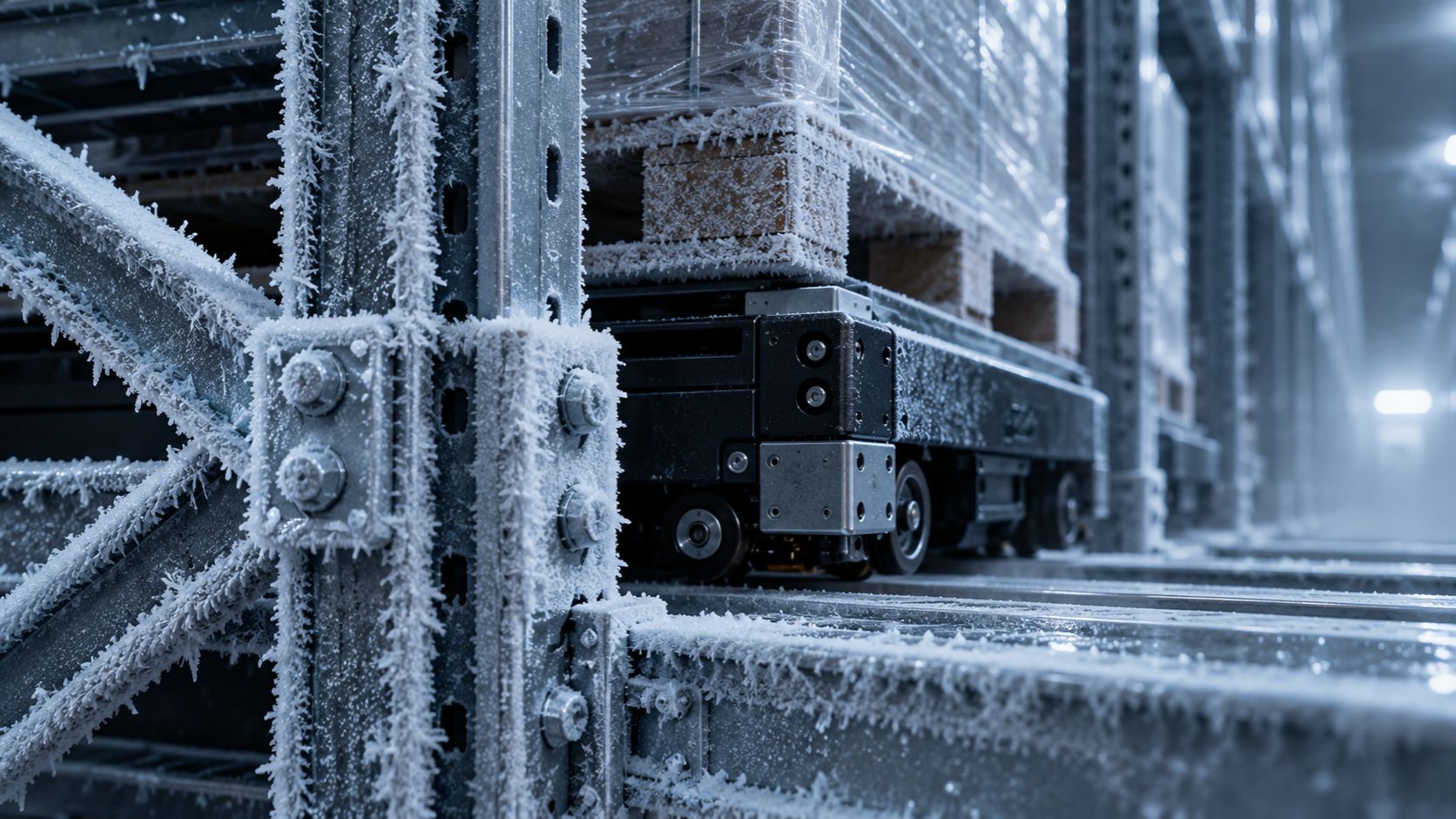
Freezer, chilled and hazardous areas are where the case is strongest. Machines tolerate conditions that force cold work exposure limits on people, so the aisle can be kept at temperature without rotation breaks or heated cabs, and lights-out shifts become viable because nobody needs to be in the aisle at all.
What flexibility you trade away
Capital is committed up front, lead times run in months not weeks, and the system assumes consistent load geometry. Broken pallets, overhanging wrap and out-of-spec totes will stop a shuttle that a forklift driver would have improvised around.
Building, Site and Safety Requirements Projects Underestimate
Mechanical specification rarely kills a schedule. The building does. Most delays trace back to conditions that were assumed rather than measured.
Floor and rack tolerances
Shuttle systems run on rails fixed to uprights that transfer load into the slab. Flatness and levelness are governed in millimetres across defined spans, and upright positioning tolerance is tighter still, because a shuttle cannot negotiate a step between rail sections. Grinding or re-topping a slab after steel arrives is the single most expensive remedy on site.
Clear height, fire protection and seismic design
Usable height is clear height minus sprinkler clearance, roof structure and lift overtravel, not the ridge dimension on the drawing. In-rack sprinklers change aisle geometry and flue space, so fire engineering belongs in the layout phase. Seismic category drives bracing, baseplate anchorage and steel weight, and in high-category zones it can change the economics of the whole design. Confirm the applicable rack design standard early.
Temperature, power and ambient limits
Freezer duty down to around minus twenty-five degrees Celsius requires rated lubricants, battery chemistry, condensation management and charging strategy. Confirm power provision, UPS scope and network coverage inside the rack grid.
Guarding, access zones and maintainability
Interlocked access zones, a documented risk assessment and maintenance platforms are design inputs, not afterthoughts. Pre-contract site checklist:
- Slab flatness, levelness and load capacity survey
- Clear height and sprinkler clearance confirmed
- Seismic category and anchorage requirements
- Power, UPS and network provision
- Temperature range and humidity limits
- Maintenance access routes and spares location
What an ASRS Costs and How to Build the Business Case
What actually drives the capital number
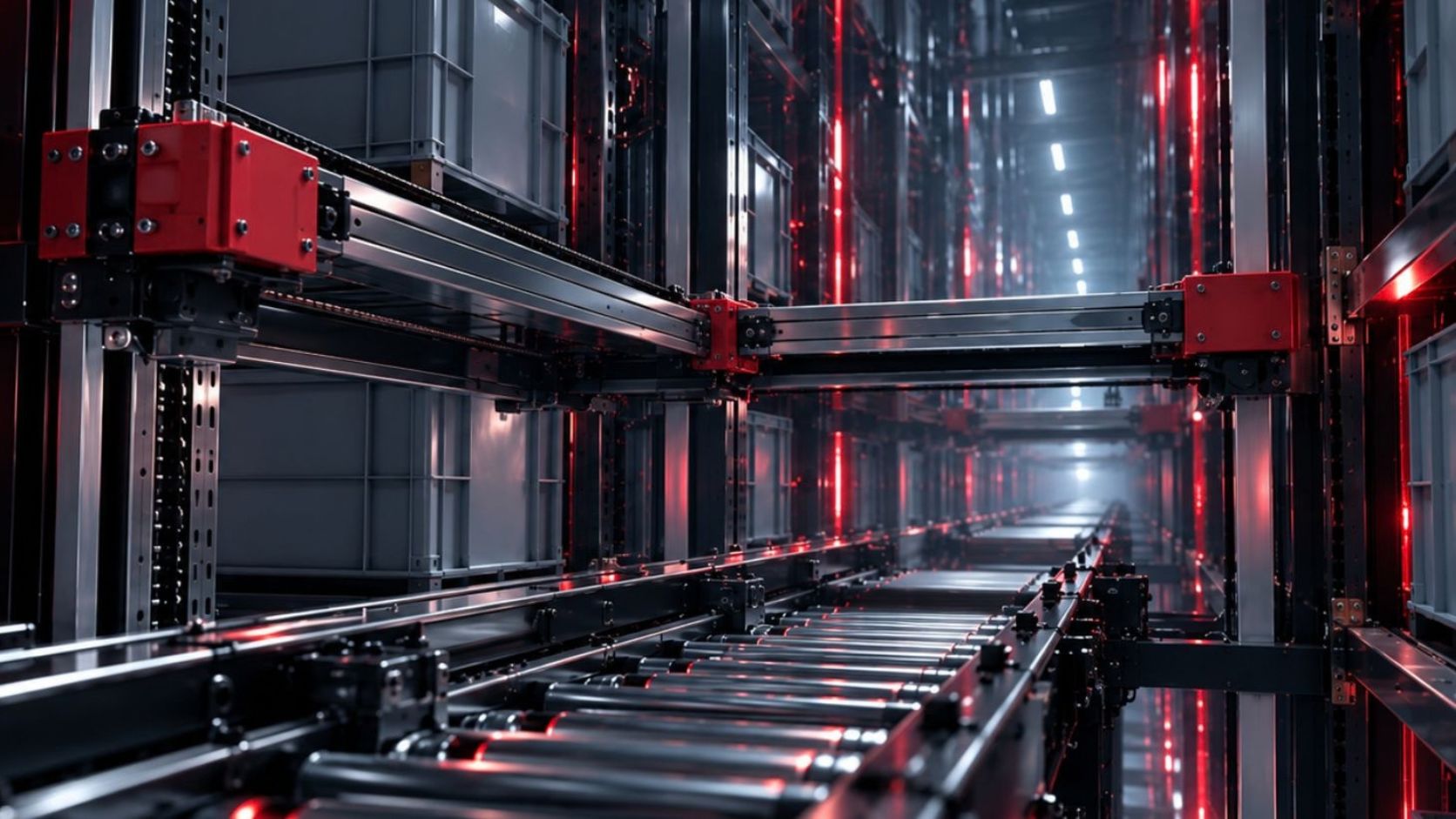
Capital splits into three buckets: equipment (rack steel, shuttles, lifts, conveyor and transfer decks, controls, WCS and WMS integration, commissioning), building works, and the engineering hours that tie them together. Within equipment, the variables that move the total most are machine count, lift count, the throughput target that dictates both, and building height. Height raises steel tonnage, lift travel and seismic bracing demand. Throughput is the multiplier behind everything: double the required cycles per hour and you do not buy slightly more hardware, you buy another aisle’s worth of machines and lifts. A detailed breakdown of what an ASRS system costs is worth reading before any budget is locked.
Operating and maintenance cost
Ongoing cost is modest relative to capital but rarely modelled properly. Budget for energy, a maintenance contract or in-house technician cover, a critical spares holding sized to your downtime tolerance, and annual software support with version upgrades. Treat spares as insurance, not inventory.
Building a payback case that survives scrutiny
Defensible paybacks rest on labour hours avoided, floor area or rent deferred, and reduced picking errors and product damage, each tied to audited baselines using a method finance recognises, such as discounted cash flow. Business cases almost never fail on equipment price. They fail because the throughput assumption was optimistic, so the modelled labour saving never materialises.
Choosing the Right System, and When to Stay Manual
Start with the order and SKU data
Selection runs from data to system type to supplier, in that order. Pull twelve months of order lines and extract lines per order, active SKU count, movement profile by SKU rank, seasonal peak against average, the unit of handling at each stage, and a growth horizon you are willing to defend. A profile of few lines per order across thousands of slow SKUs points somewhere very different from a dense, fast-moving assortment picked in large baskets. Only once that profile is fixed should you shortlist vendors, because the technology choice constrains who can bid.
How industry context changes the answer
Food and beverage adds temperature zones, hygiene rules and date-code rotation. Pharmaceutical adds good distribution practice traceability and segregation. Third-party logistics needs reconfiguration between contracts, so modularity beats peak density. E-commerce pays for piece-pick throughput at peak. Automotive pays for sequencing accuracy to the line.
When conventional racking is the better choice
An automated storage retrieval system is the wrong buy at very low throughput, with unstable load dimensions, on short lease terms, in buildings under roughly nine metres of clear height, or where layouts change monthly. Read our analysis of selective pallet racking versus automated storage before committing.
Questions to ask before signing
Ask for throughput under degraded conditions, spare part lead times, control software ownership, commissioning milestones tied to payment, and the named reference site you may visit unaccompanied.
Common Questions About ASRS
1. What does an ASRS actually do?
An ASRS stores loads in a dense structure and delivers them to a fixed point on command, without an operator travelling to the location. Software holds the inventory record, the hardware executes the move. Everything else, picking, packing, sortation, sits around that core function rather than inside it.
2. What are the main types of ASRS?
Unit-load and pallet shuttle systems for full pallets, mini-load and tote shuttle systems for cases and totes, carousels and vertical lift modules for small parts, and cube storage for high-density tote handling. Load size, not throughput ambition, is the first filter.
3. How long does an ASRS project take from order to go-live?
Timelines run from months for a single vertical lift module to well over a year for a rack-supported shuttle warehouse. Design freeze, steel fabrication, permitting and software integration drive the schedule more than equipment manufacture does.
4. Can an ASRS be expanded or relocated later?
Shuttle systems expand by adding aisles, levels or shuttles, provided the original controls architecture and building envelope allowed for it. Relocation is physically possible but rarely economic once rack-supported structure and fire protection are tied to the site.
Deciding Whether Automated Storage Fits Your Building
There is no best automated storage and retrieval system, only the one whose storage density and sustained throughput match your order profile inside the building you actually have, with the clear height, floor flatness and fire approvals it actually carries. Every trade-off covered above comes back to that fit.
The decision sequence matters as much as the answer. Data first: SKU velocity, line counts per order, case and pallet mix, peak-hour volumes rather than annual averages. System type second, chosen against those numbers and the constraints of the shell. Supplier third, once you know what you are buying and can compare quotes on the same duty cycle.
Most catalogues quote peak rates on ideal layouts. If you want a figure you can budget against, send us your load profile, lane depths and peak-hour requirements and talk it through with one of our engineers.