


Totes, Not Pallets: The Real Dividing Line in Automated Storage
Almost no fulfilment site ships the way it receives. Inbound arrives as full pallets, neatly unitised, and leaves as single pieces, inner packs and mixed cases. That mismatch is where most automation decisions go wrong, and it is the reason a mini load ASRS and a pallet shuttle system solve genuinely different problems rather than competing on the same spec sheet. One moves weight efficiently. The other moves order lines efficiently. Confusing the two is expensive.
The honest answer to which belongs in your building has nothing to do with vendor preference. It depends on your order profile, your active SKU count and your required pick lines per hour. Those three numbers determine whether tote-level handling earns its keep or simply adds a decanting step you did not need. The sections below work through exactly where that line falls.
What a Mini Load ASRS Actually Handles
A mini load ASRS stores and retrieves individual totes, cartons and trays instead of full pallets. Four elements define the class: a fixed storage structure, a carrier that travels into the rack or along the aisle, a vertical lift connecting levels, and a goods-to-person workstation where the operator stays put and inventory moves.
What counts as a handling unit
Plastic totes with roughly 600×400 mm footprints are the common denominator, alongside smaller bin sizes, shipper cartons and flat trays. Payloads per handling unit normally sit in the tens of kilograms rather than the hundreds. Dimensional consistency matters more than mass. A carrier that cannot find a reliable gripping or supporting surface will not perform, regardless of how light the load is.
The four building blocks of the system
Structure, carrier, lift and workstation are interdependent. Throughput is set by whichever of the four saturates first, usually the lift or the pick face, not the shuttle itself.
Where it sits between piece picking and unit load
A miniload ASRS occupies the middle ground: a container-level automated storage and retrieval system feeding goods to person stations, above manual shelf picking and below pallet-level unit load handling.

Comparison Section: Tote-Level Versus Pallet-Level Systems on Density and Throughput
Density per cubic metre, not per pallet position
Counting pallet positions flatters pallet architecture. A single pallet position consumes the volume that would otherwise hold dozens of tote locations, and if the SKU inside moves twice a year, most of that cube is paid for and idle. Measure locations per cubic metre instead and the picture inverts: a mini load system converts the same rack envelope into far more discrete addresses, which matters directly when SKU count is rising faster than volume. The relevant question is not how much you can store but how many separately retrievable items you can store.
Handling units per hour per aisle
Pallet systems win decisively on mass per move. One cycle can shift close to a tonne. Tote systems win on moves per hour, because the moving mass is smaller, acceleration is higher, and multiple shuttles can work the same aisle across levels. Throughput should therefore be quoted as handling units per hour per aisle, not as a headline cycle time, and then tested against your real order profile rather than a standardised cycle test.
Why cost per pick line is the honest metric
Cost per location favours whichever system holds the most volume. Cost per pick line asks what the system actually delivers. If retrieving eight pieces requires moving a full pallet, the economics are visible immediately.
Mini-Load and Unit-Load Side by Side
The specification differences between the two tiers become clearer when set out column by column.
| Parameter | Mini-Load (Tote) | Unit-Load (Pallet) |
|---|---|---|
| Handling unit | Tote, carton, tray | Pallet, stillage |
| Typical payload | Tens of kilograms | Up to roughly a tonne or more |
| Storage height | Moderate to high bay | High bay, structurally governed |
| Retrieval granularity | Individual tote | Whole pallet |
| Best-fit orders | Multi-line, small-quantity picks | Full-pallet replenishment |
| Configuration | Multi-level tiers, dense aisles | Deep lanes, fewer levels |
| Throughput unit | Totes per hour | Pallets per hour |
Granularity drives everything else. Tote retrieval matches order profiles where lines outnumber units, while pallet systems optimise bulk movement. Compare throughput figures only within the same unit.
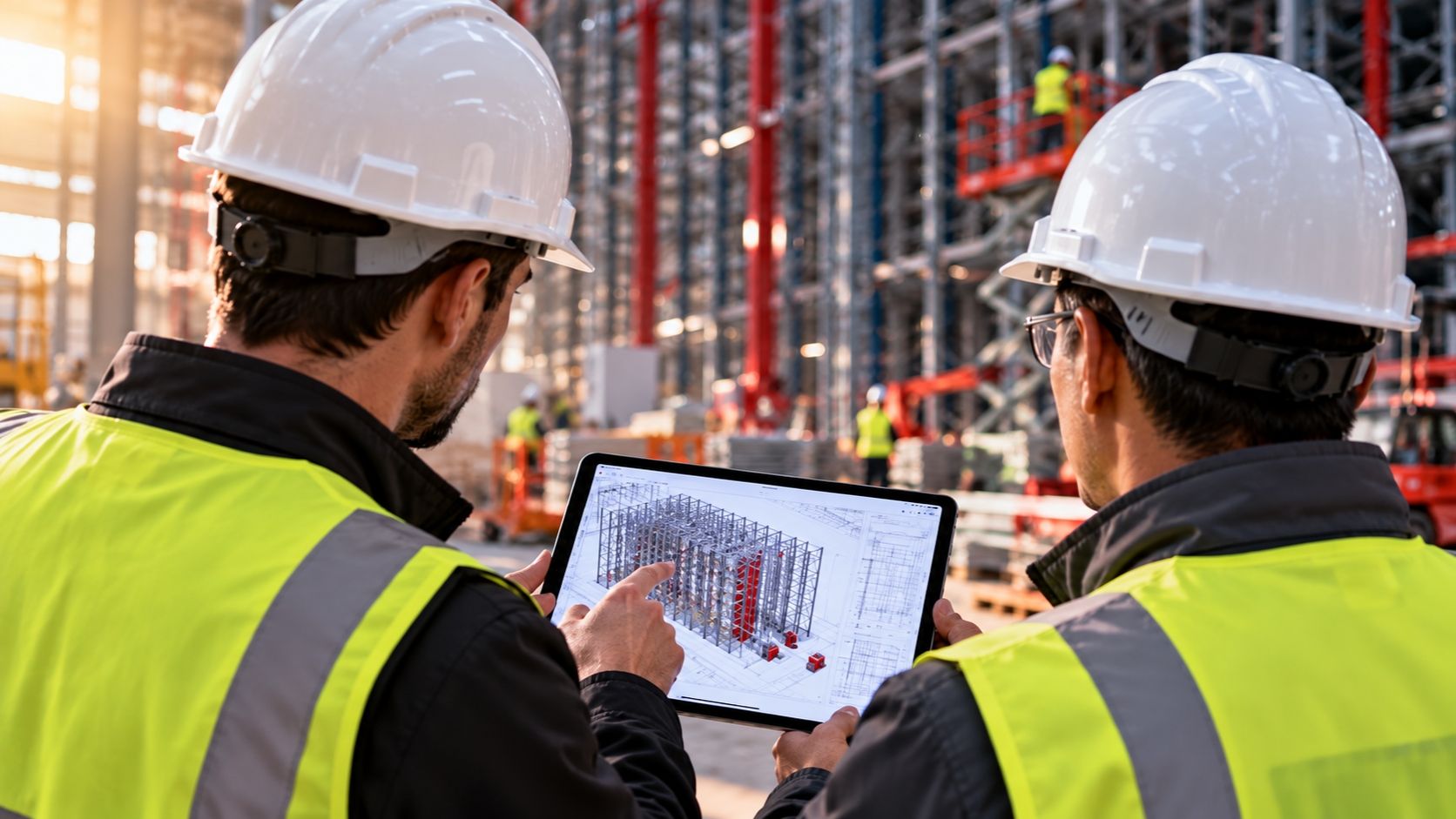
Shuttles, Lifts, Carousels and Cube Stores: Picking the Right Mini-Load Architecture
“Mini-load” covers at least five mechanically distinct families, and they behave very differently once you ask for a random SKU rather than an average one. The decision criteria that separate them are retrieval time under random access, density per square metre, and how gracefully the system expands after go-live.
- Rack-integrated tote shuttles: judged on sustained dual-cycle rate. Dedicated carriers per level give the highest aisle throughput; roaming carriers that change levels via lift trade peak rate for lower capital cost per location.
- Vertical lift and buffer modules: judged on floor area. Excellent for a few hundred slow SKUs in a tight footprint, but one extraction point per unit caps concurrency hard.
- Carousels and cube grids: judged on random-SKU retrieval. Carousels rotate the whole load to reach one tote. Cube grids dig, so deep SKUs cost multiple moves.
- Mobile-robot-fed shelving: judged on expansion behaviour. Add robots incrementally, accept lower density.
Why the control software decides real-world rate
Slotting logic, lift sequencing and warehouse control system scheduling determine whether a box storage ASRS hits its mechanical ceiling. Maintainability differs just as widely: count the failure points a technician can reach without emptying an aisle.
Tote Specifications Decide the Whole Design
Most procurement conversations start with throughput targets and end with budget. The tote itself, the one component that constrains every other decision, rarely gets more than a line in the spec. That is backwards. Carrier geometry, lift duty cycle, rack pitch and transfer reliability are all downstream of the container.
Standard footprint or mixed sizes?
A single standardised footprint, typically drawn from Euro container dimensions, buys the cleanest rack pitch and the simplest carrier. The problem is that SKU dimensions rarely cooperate. Forcing diverse inventory into one tote size wastes cubic volume in half the locations. Mixed-footprint handling costs more in carrier complexity but recovers that volume, and a well-specified tote shuttle system offers carrier variants built for exactly this trade-off.
Payload and fill factor per tote
Tote height drives rack pitch directly. Taller totes mean fewer levels in the same clear height, so height should follow actual fill factor rather than the maximum SKU. Payload per tote sets carrier motor sizing and lift counterweighting, and an over-specified payload rating you never use is paid for in every single unit.
Positioning tolerance at the transfer point
Tote rigidity and lip design determine whether handling stays reliable at millimetre-level tolerances. Flexible walls and inconsistent lips cause misreads and jams no control system fully compensates for.
Why the Lift, Not the Shuttle, Caps Your Throughput
Walking through the throughput chain
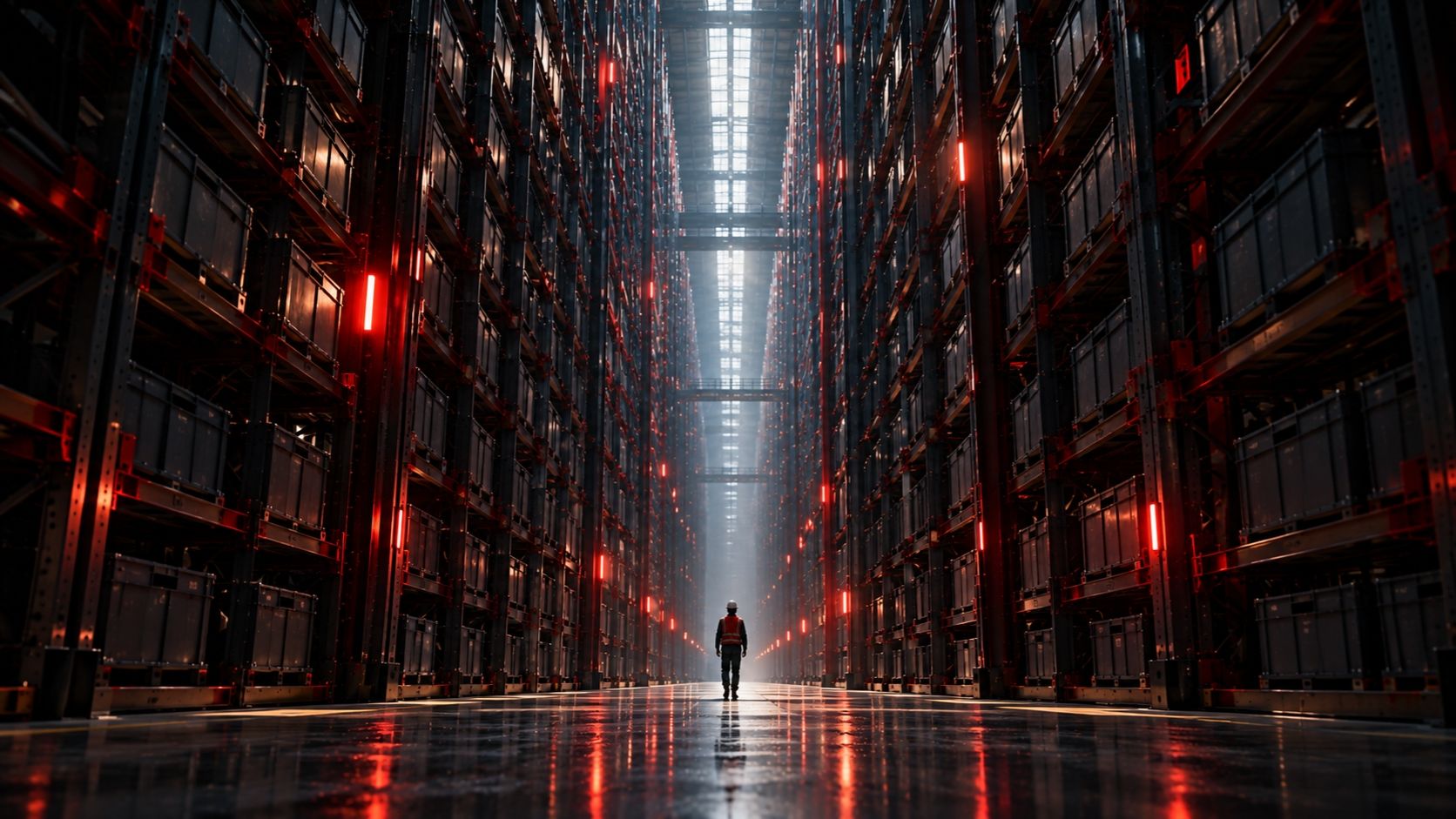
Throughput is a chain, and the chain breaks at its weakest link. A shuttle moving within one level handles a short horizontal cycle. The lift serving that aisle must handle every tote entering and leaving every level, so it accumulates the demand of all shuttles above and below it. Downstream, the transfer conveyor, the buffer and the operator at the pick face each impose their own ceiling. Add a fast shuttle to an aisle whose lift is already saturated and nothing changes. Real warehouse throughput is set by whichever element runs closest to its limit during peak, not by the headline shuttle figure.
Dedicated versus roaming carriers
Dedicated-level shuttles give predictable cycles and redundancy per level. Roaming carriers that change levels via the lift cut capital cost but consume lift capacity to reposition themselves, which is exactly the resource already under pressure. Dual-lift aisles, inbound and outbound separation, pre-workstation buffering and double-cycling (retrieve and store in one trip) all relieve that constraint.
What to demand in a throughput quote
Require peak-hour rates, stated dual-cycle assumptions, and discrete event simulation run against real order lines rather than daily averages.
When Pallet-Level Automation Is Simply the Better Answer
Vendors who sell only tote systems will tell you tote handling always wins. It does not. There are operations where moving cases into bins destroys value, and recognising them early saves a failed capital project.
Low SKU count, high volume per SKU
When a few hundred SKUs move in full-pallet or full-layer quantities, the pick face is the pallet. Breaking that into totes adds handling steps without improving selectivity, because selectivity was never the constraint. Beverage, bulk paper, pet food and raw material feeds into production all behave this way.
Loads and lane depths totes cannot serve
Pallet-level automation is the better answer where:
- Unit weight or footprint exceeds tote payload and envelope limits
- Deep-lane buffering of a small number of fast movers is the actual requirement
- Deep-freeze environments make manual decanting slow, costly and injury-prone
- Despatch is by full pallet, so no sequencing benefit exists downstream
- Inbound arrives palletised and leaves palletised, with no case picking step between
The decanting labour nobody budgets
Decanting is the hidden line item that kills weak business cases. Every case opened, counted and transferred into a bin is labour the spreadsheet usually ignores, plus damage and shrink exposure. Many sites correctly run a pallet shuttle system for bulk reserve alongside tote automation for piece picking, in the same building.
Common Questions From Fulfilment and Engineering Teams
1. How many totes per hour should I expect per aisle?
It depends on shuttle count, lift configuration and tier height, not on the shuttle alone. Specify the number you need at the pick face, then size lifts and buffer conveyors to deliver it.
2. Can tote systems run in chilled or frozen environments?
Chilled operation is routine. Frozen requires rated components, condensation control and lubricant selection, and it narrows tote material options because polymers behave differently below freezing.
3. What maintenance does a shuttle-and-lift system need?
Wheel, belt and drive inspection on defined cycles, plus lift chain or belt checks. Most operators run first-line tasks internally and contract deeper work.
4. Can the system be expanded after go-live without stopping operations?
Adding shuttles within existing aisles is straightforward. Extending aisles or adding lifts means localised shutdowns, so plan expansion paths before the build.
Match the Architecture to the Order Line, Not the Inbound Pallet
The decision rule is simpler than most tender documents make it. Look at how goods leave, not how they arrive. If orders depart as pieces and cases across a long SKU tail, tote-level in-rack automation gives you more discrete locations and more picks per square metre than any pallet-level equivalent. If orders depart as full pallets, stay at pallet level and spend the capital on lanes and lifts instead.
Sizing only becomes credible once real data enters the conversation: lines per order, SKU dimensions and weights, peak hour volumes rather than annual averages. Bring those numbers, along with your building envelope, and our engineering team will work through layouts, lift counts and throughput targets with you before anything is committed.