


Automating Pallet Storage: What the Decision Really Hinges On
Most pallet automation projects do not start with a technology ambition. They start with a wall. The building cannot grow sideways, the site cannot recruit enough warehouse workers to cover three shifts, and the despatch window keeps shrinking because customers moved their cut-off times. An automated pallet storage and retrieval system gets specified because the arithmetic of the existing operation stopped working, not because anyone wanted robots.
Which architecture you choose is then settled by two numbers: pallets per hour at peak, and pallet positions per square metre of floor. Everything else, including every adjective in every brochure, is commentary on those two figures.
This guide works through the main architectures, the sizing maths behind them, the specification detail that separates a system that hits its numbers from one that does not, the real cost drivers, and the situations where automation is simply the wrong answer.
What an Automated Pallet Storage and Retrieval System Is, and What Sits Inside One
An automated pallet storage and retrieval system is a fixed structure, governed by software, that receives unit loads at a defined interface, stores them in a known coordinate, and releases them on command without an operator ever entering the storage volume. Everything else, crane or shuttle, single deep or multi deep, is a configuration choice inside that definition.
The physical building blocks
Six elements appear in nearly every automated pallet warehouse: the racking structure itself, which carries both load and the running surfaces; the storage and retrieval device, whether stacker crane, autonomous mobile robot or rack-resident pallet shuttle systems; vertical lifts linking levels; infeed and outfeed conveyor or transfer stations; profiling and dimension-check gates that reject out-of-spec loads before they jam an aisle; and perimeter fencing with interlocked access doors built to recognised machine safety standards.
What the control software actually decides
The WMS owns inventory and order priority. The WCS or WES sequences moves, allocates locations, balances aisle load and decides what gets pre-positioned. PLCs and onboard controllers execute. Throughput is won or lost in that middle layer, and so is most project risk.
How a pallet moves from goods-in to a storage location
Pallet arrives, gets identified and profiled, is assigned a location by the WCS, travels by conveyor to a lift, then shuttle or crane places it. Confirmation returns upstream.

Three Architectures Compete for the Same Pallets
Three approaches realistically contend for the same pallet positions, and the structural difference between them matters more than any vendor spec sheet. Stacker cranes and in-rack shuttles live inside the rack grid, so throughput scales by adding devices to a fixed structure. Mobile robots and automated forklifts share floor aisles with each other, so they scale by adding vehicles and, eventually, aisle space. That distinction drives where the bottleneck sits.
Stacker cranes: height and single-deep access
One crane serves one aisle. Throughput is capped by crane cycle time, so every extra pallet per hour means another aisle and another machine. Double-deep configurations improve density but add a relocation move.
In-rack shuttles and lifts: deep lanes, parallel devices
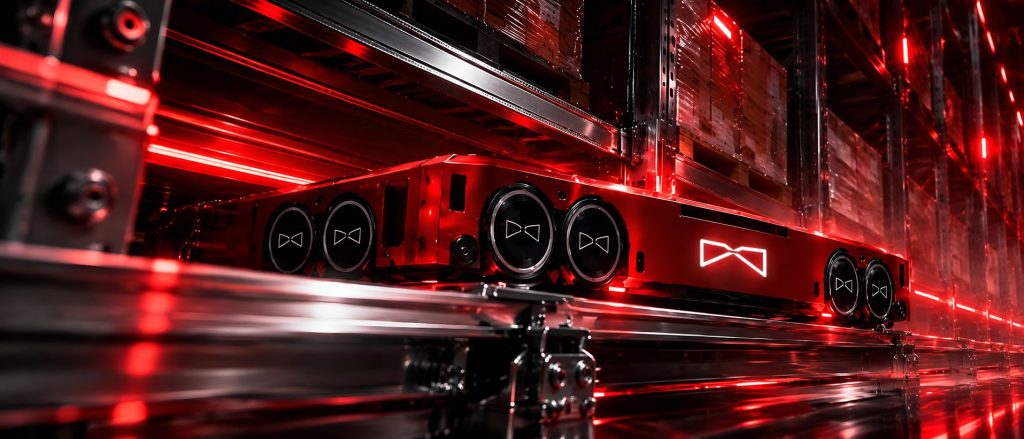
Shuttles decouple horizontal and vertical motion, so lanes can run deep and devices work in parallel. The bottleneck migrates to lift capacity at the rack face and transfer car availability. Understanding the types of pallet shuttle systems matters because each configuration moves that constraint differently within an automated pallet racking system.
Mobile robots in conventional racking: flexibility at a density cost
Vehicles need drivable aisles, which costs cube. Congestion at the aisle mouth, not vehicle speed, usually limits performance once fleet management traffic rules engage.
- Cranes: tall buildings, SKU-heavy ranges, moderate throughput per aisle.
- Shuttles: high throughput, deep lanes, concentrated SKU volumes.
- Robots: phased rollouts, existing racking, lower pallet velocity.
Architecture Comparison: Density, Throughput and Access
The three architectures differ less in software than in how each one scales. Read the behaviour, not the brochure.
| Attribute | Stacker crane AS/RS | In-rack shuttle with lifts | Mobile robot / automated forklift |
|---|---|---|---|
| Typical lane depth | Single or double deep | Deep lane, limited by lane logic not mechanics | Shallow to moderate, depends on vehicle reach |
| Aisle requirement | Dedicated crane aisle per module | No travel aisle inside the block | Conventional aisles retained |
| Throughput scaling | Add aisles and cranes; steps are large and costly | Add shuttles and lifts incrementally within the same rack | Add vehicles until congestion and charging dominate |
| SKU access (selectivity) | Near full selectivity | High at lane face; depends on SKUs per lane | High, but access time varies with travel distance |
| Rotation suitability | FIFO or LIFO without penalty | FIFO with through-flow lanes, LIFO single entry | FIFO achievable, software dependent |
| Pallet and floor sensitivity | High on rail flatness, moderate on pallet quality | High on pallet quality, rack-borne so floor tolerance is wider | Very high on floor flatness and joint condition |
Divide your SKU count by pallets held per SKU. A low ratio favours deep-lane shuttle blocks. A high ratio pushes you toward selectivity, and the cost of that selectivity is the real decision.
Sizing the System: Pallets per Hour and Pallet Positions per Square Metre
Building a peak-hour throughput number you can defend
Start from the operation, not the datasheet. Count peak-hour inbound pallets, peak-hour outbound pallets, replenishment moves to pick faces, and internal relocations such as consolidation or quality holds. Add them. Then apply a contingency factor derived from your own order history, comparing the busiest week against the annual average. A system sized to average volumes fails in the only weeks that matter. Most undersized automated pallet storage projects are undersized because internal moves were never counted.
Why dual-cycle and single-cycle rates differ
A single cycle moves one pallet and returns empty. A dual cycle combines a put-away and a retrieval in one trip, lifting effective rate substantially. Vendor peak figures usually assume dual cycling with ideal sequencing, meaning an inbound pallet is always waiting when a retrieval finishes. Real operations rarely sequence that cleanly, especially when inbound and outbound peaks fall at different hours. Ask for both numbers and the assumed dual-cycle ratio.
Setting lane depth from pallets per SKU
Deeper lanes raise positions per square metre but cost selectivity. Set depth from the average pallets per SKU, not from the footprint you happen to have. Six-deep lanes holding two-pallet SKUs create honeycombing that erases the density gain, which is why our high-density storage solutions are configured per SKU profile.
What building height and floor loading actually allow
Usable height ends below the sprinklers, not at the roof steel, and NFPA 13 storage requirements govern that clearance. Slab flatness and point loading then cap what the rack can carry.
Specification Detail Engineers Should Pin Down Before Quotation
Most commissioning delays are not software problems. They trace back to a specification sheet that left a tolerance, a temperature or a pallet grade undefined, then discovered the gap during load testing with the integrator already on site.
Payload, load envelope and overhang limits
State payload in kg gross, including the pallet itself and the worst-case overload your receiving process will actually pass. Define the load envelope in all three axes, plus the overhang you will tolerate on each side. A FPSS1500A four-way pallet shuttle handles a defined envelope; anything outside it becomes a manual exception lane you must budget for.
Positioning tolerance and rack installation accuracy
Specify positioning tolerance in mm at the rack face, then confirm the steelwork can hold it. Rack installation accuracy is a structural commitment, not a commissioning adjustment, and it should sit in the rack contract alongside seismic design requirements.
Temperature range, condensation and cold-store duty
Separate ambient, chilled and deep-freeze duty. Cold stores change battery discharge behaviour, lubricant choice and sensor reliability, and condensation on vehicles cycling through dock-side transitions causes faults that no one tested for in a warm trial.
Pallet quality: the most common failure source
Pallet quality causes more jams in otherwise sound designs than any other factor. Specify it explicitly:
- Pallet standard: euro, GMA, or regional variant, and whether mixed types enter the same aisle
- Material: timber, plastic, or slip sheets requiring a carrier pallet
- Acceptable damage limits: broken or missing bottom boards, protruding nails, loose blocks
- Moisture content and ice build-up rules for frozen inbound
- Inspection point and reject route before the load reaches the lift
Where Automated Pallet Handling Earns Its Keep, and Where It Does Not
Operating profiles that suit in-rack automation
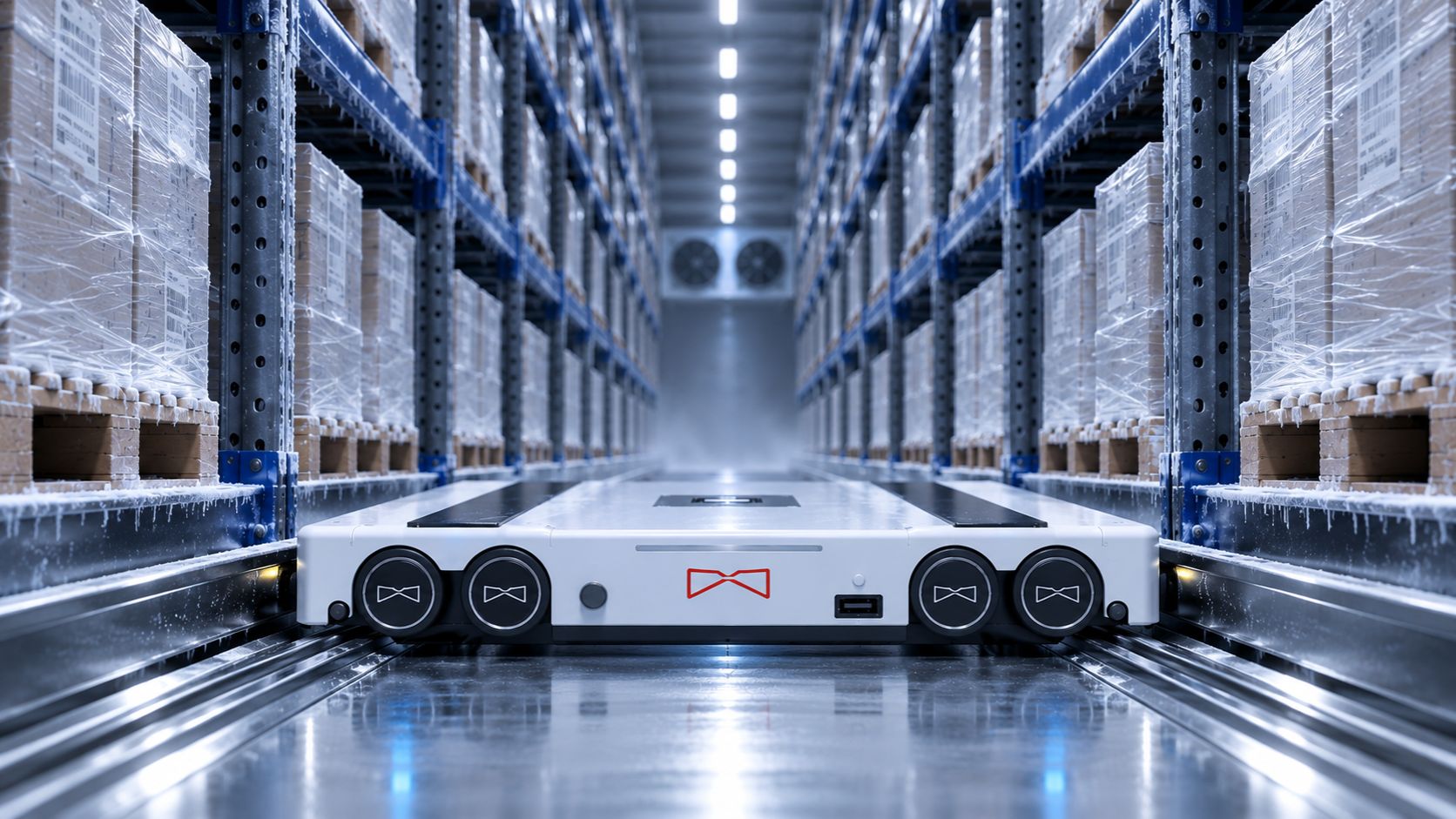
Cold and frozen storage sits at the top of the list. Labour hours below freezing carry premium rates, break requirements and high turnover, and the building envelope itself is the expensive asset, so compressing the same inventory into less refrigerated volume pays twice. Food and beverage operations with high pallet counts per SKU and strict FEFO discipline suit deep-lane shuttle layouts, because sequence control is handled by software rather than by a driver reading labels. Manufacturing and 3PL buffers feeding production or outbound docks benefit from predictable release timing more than from raw speed. Pharmaceutical and regulated goods operations gain from event-level traceability that stands up to Good Distribution Practice audits without manual reconciliation.
What the business actually gains
The measurable gains are floor area recovered for value-adding work, cycle times that hold steady across shifts rather than degrading at night, fewer rack impacts and crushed loads because handling is machine-controlled, and the removal of operators working at height in narrow aisles. Inventory accuracy improves as a by-product, not as a separate project.
When conventional racking and forklifts remain the better call
Very high SKU counts holding one or two pallets each defeat lane-based density. Short lease horizons rarely recover the fit-out. Unstable or highly variable load dimensions generate exceptions that erode availability. And where throughput is genuinely low, reach trucks remain cheaper, and honest analysis says so.
Budget, Payback and the Order in Which a Project Gets Built
What moves the capital number most
Storage positions set the steel and the footprint, but device count sets the price curve. Adding shuttles, cranes, lifts or rack-face conveyors buys throughput in discrete steps, and each step carries controls, safety circuits and commissioning labour with it. Software scope is the line item most often underestimated: a simple inventory handshake costs a fraction of full task interleaving, slotting logic and dual-cycle optimisation. Civil works then surprise people. Floor flatness correction across a high-bay aisle, seismic anchoring and revised sprinkler or in-rack fire protection design can rival the cost of a shuttle fleet. Our breakdown of pallet shuttle system cost separates these layers.
Running costs people forget to budget
Budget wear parts and battery or capacitor replacement on a defined cycle, not on failure. Allow for scheduled maintenance windows that reduce available hours, a remote support agreement with defined response times, and power draw including charging losses and refrigerated-environment penalties.
A realistic project sequence and timeline
Order data and simulation, layout freeze, structural and fire approvals, racking installed to tolerance, device commissioning, software integration, then a ramp-up running parallel to existing operations until volumes transfer.
Where schedules usually slip
Three causes dominate pallet automation delays: order data arriving late or incomplete, WMS interface scope expanding after layout freeze, and building approvals outside your control. Sequence all three early.
Common Questions From Operations and Engineering Teams
1. How many pallet positions make automation worth considering?
There is no universal threshold. What matters is the ratio of movements to positions, land cost per square metre and labour rate, so a dense 4,000 position buffer with high turnover can justify automation while a slow 15,000 position reserve store cannot.
2. Can an automated pallet system handle mixed pallet types and damaged pallets?
Mixed footprints are manageable if declared at design stage and handled by profile checks at inbound. Damaged stringers and protruding boards are the real failure mode, which is why a pallet inspection gate and a reject lane belong in scope.
3. What happens to throughput if a shuttle or crane fails?
Shuttle systems degrade gradually because remaining vehicles absorb the work, while a single crane per aisle removes access to that aisle entirely. Design redundancy around the lifts and conveyor interfaces, not just the vehicles.
4. Can an existing building be retrofitted, or is a new build required?
Retrofits are common. Clear height, floor flatness, column grid and fire approvals decide whether the economics hold.
Decide on Numbers, Not Adjectives
Every decision in this guide collapses into a short sequence. Establish peak pallets per hour at the busiest shift, not the annual average. Count pallets per SKU, because that single ratio decides whether deep lane storage helps you or buries you. Only then choose an architecture, and only then write the specification: payload including the pallet, pallet quality and dimensional tolerance, floor flatness, temperature range and control interface. Quotes requested before those numbers exist will differ from each other for reasons nobody can audit.
Density and throughput pull against each other. There is no configuration that maximises both, so trade one against the other on purpose and document why.
If you have throughput profiles and a building footprint, HWArobotics engineers will model them against in-rack shuttle options and show you where the trade lands.