


Three Ways to Move Goods, One Decision to Make
Nobody wakes up wanting to buy a vehicle class. The search for agv vs amr almost always starts somewhere less tidy: picks per hour are capped, the building is full, labour is unreliable, and someone upstairs wants a number by Friday. The technology question is downstream of a throughput or space problem, and the two get confused constantly.
So this piece does the honest version first. What guided vehicles actually are, what autonomous mobile robots actually are, where each genuinely earns its keep, and where the marketing outruns the engineering. Then, clearly labelled as a separate argument, a look at how rack-grid shuttle and lift systems attack the same throughput and density problem from inside the storage structure rather than from the floor around it. Three architectures, one decision.
What an AGV Actually Is and How It Finds Its Way
An automated guided vehicle is a floor-level vehicle that follows a path installed into the building: magnetic tape, embedded wire, floor magnets, QR codes or wall-mounted reflectors read by an onboard laser scanner. It drives that path repeatedly and precisely. When an obstacle appears, it stops and waits rather than planning a way around.
How fixed-path guidance works
The intelligence sits in the infrastructure, not the vehicle. Tape and wire define the route physically. Reflector-based laser triangulation and QR floor codes give the vehicle discrete position references to fix against. Either way, the route is engineered once and changed only by reinstalling guidance.
AGV, AGC or automated forklift?
Form factors include tow tractors, unit-load carriers, counterbalance and reach-truck forklifts, and automated guided carts. AGC usually denotes a simpler, lower-cost cart follower with limited onboard logic, so treat it as a subset of the broader AGV category rather than a separate technology.
What the building has to provide
Expect requirements for floor flatness, guidance installation, defined charging positions and traffic-controlled aisles. Ask every agv robot vendor for positioning repeatability in millimetres.

What an AMR Is and Why Free Navigation Changes the Project
SLAM and dynamic path planning
An autonomous mobile robot carries its own map. Using SLAM with lidar and vision sensors, it localises against building features rather than fixed infrastructure, plans its own route, and steers around a stray pallet or a pedestrian instead of stopping dead until someone clears the aisle. That single behavioural difference is why AMR deployments move faster through commissioning and survive layout changes that would force a re-engineering exercise elsewhere.
Types of AMR in a fulfilment building
Four families dominate. Tote and shelf-carrying goods-to-person robots bring inventory to a fixed station. Cart movers tow or lift roll cages between zones. Pick-assist units follow operators through pick faces and consolidate batches. Autonomous pallet trucks handle full-pallet moves between dock, staging and bulk storage.
What still has to be integrated
No amr robot solves the problem alone. You still need fleet management software to resolve traffic, WMS or host integration to issue work, a charging strategy that protects peak-hour availability, and Wi-Fi or 5G coverage engineered for roaming across the full floor.
AGV vs AMR: The Differences That Actually Change Your Plan
Fixed guidance vs mapped autonomy
The real agv vs amr difference sits in what the vehicle depends on. An AGV depends on infrastructure you install and maintain. An AMR depends on a map and a localisation stack you have to keep accurate. One shifts cost into the building, the other into software and commissioning discipline.
What happens when the path is blocked
A blocked AGV stops and waits, and everything behind it waits too. An AMR routes around the obstruction, which is genuinely useful in aisles shared with forklifts and pickers. Mixed traffic also raises the safety case: free navigation demands functional safety assessment work that a fenced guided loop largely avoids.
Reconfiguration cost and commissioning time
Moving an AGV route means moving physical guidance. Changing an AMR route is a map edit. AGVs typically commission faster and sit lower per unit; AMRs cost more per robot but absorb layout change without capital rework.
Fleet scaling and traffic management
AGVs degrade predictably as fleets grow because paths are deterministic. AMR fleets scale until congestion dominates, then traffic management becomes the constraint. Both share one trait: they consume floor and aisle to move goods.
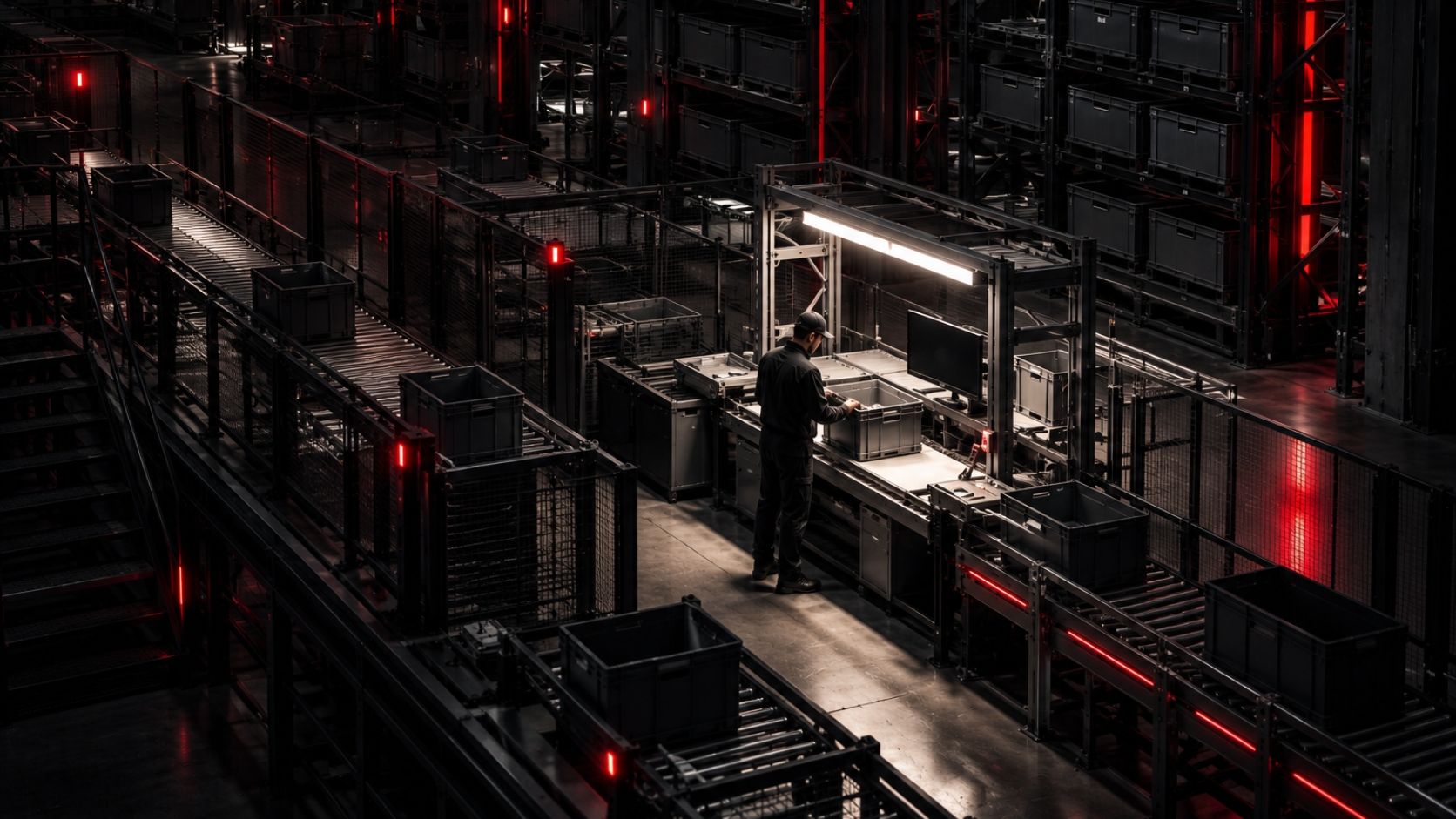
AGV, AMR and In-Rack Side by Side
The three architectures differ less in robotics than in where they put your goods and your floor.
| Factor | AGV | AMR | In-Rack |
|---|---|---|---|
| Movement | Fixed guidepath | Free navigation | Rails and lifts |
| Infrastructure | Floor guidance | Minimal | Engineered rack |
| Storage location | Racking or floor | Movable shelves | Inside the grid |
| Floor use | Dedicated routes | Travel aisles | Near-eliminated aisles |
| Reconfiguration | Civil works | Software only | Structural |
| At peak | Queues at merges | Congestion, longer cycles | Add shuttles or lifts |
| Best flow | Repeatable transport | Variable picking | High-density buffering |
| Constraint | Rigidity | Floor area | Building commitment |
Mobile fleets buy flexibility with floor space. In-rack buys density with structure.
The Problem You Are Really Trying to Solve
No operations director ever had a board paper approved for buying a robot class. The approval comes when the project fixes a measurable constraint: not enough cases out the door, not enough space in the building, not enough people willing to work the back shift. Pick the metric first, then let it eliminate the technologies that cannot move it.
Throughput per square metre, not robots per hour
Density you cannot buy back later
What peak day really tests
- Throughput per square metre. A fleet quote tells you picks per hour. Divide that by the floor area the fleet needs, including aisles and charging, and the ranking often changes.
- Density. Building height is a sunk asset. A decision that stores goods at floor level leaves the cube above it unused, and you cannot retrofit that density cheaply once racking and fire protection are set.
- Peak behaviour. Measure accuracy and cycle time on your worst day, not your average, and factor in warehouse labour turnover when staffing that peak.
Comparing vehicles answers only the transport half. Storage density sits in a different branch of the types of warehouse automation, and that is where the next section goes.
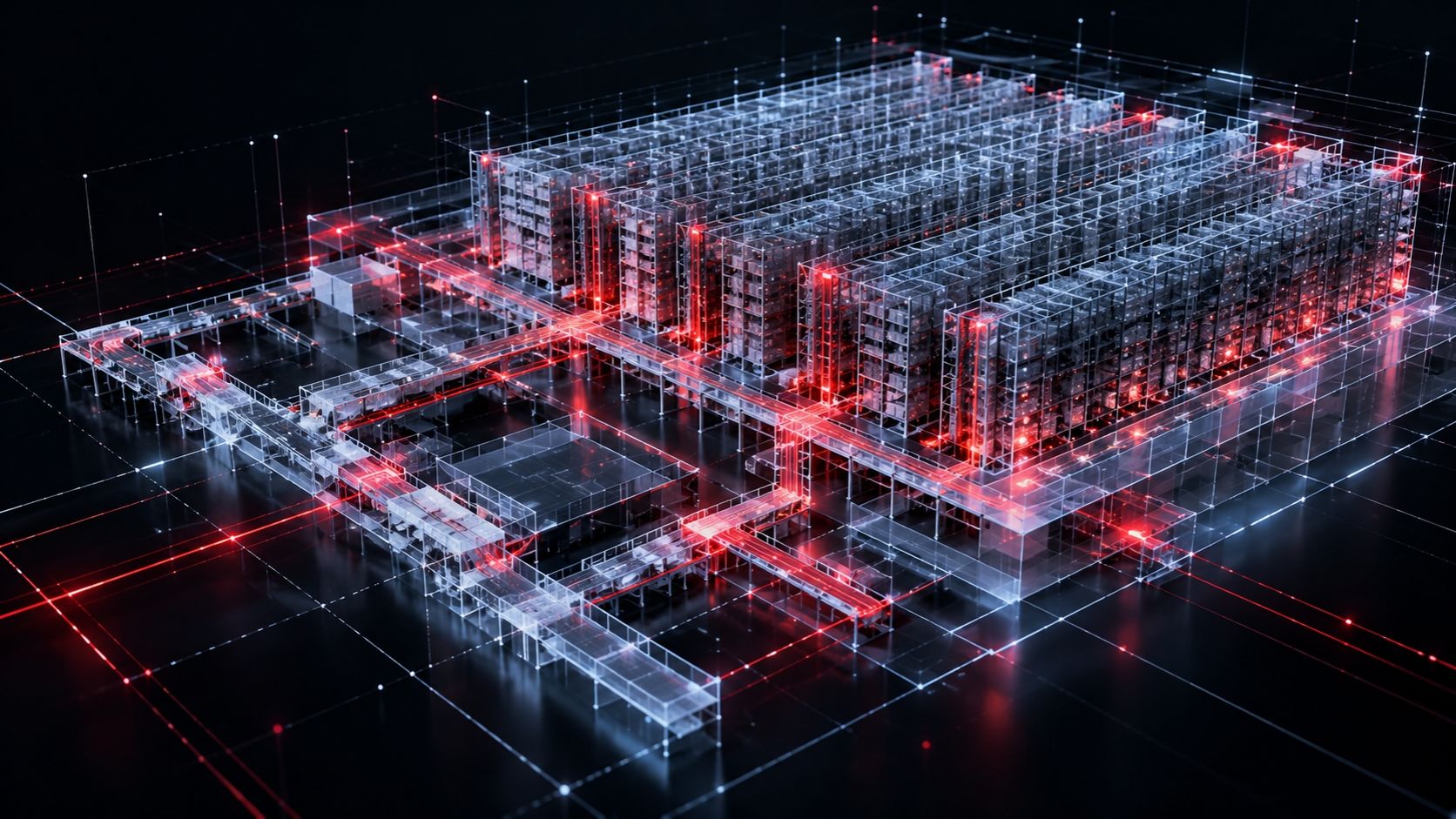
Comparison: Mobile Goods-to-Person vs In-Rack Goods-to-Person
Where the storage actually lives
Mobile goods-to-person fleets carry inventory on movable shelf units or lift totes from the face of static shelving, then drive them across the floor to a station. The storage sits on the floor plate, single or double deep, and typically stops at the height a floor robot can safely reach and stabilise. In-rack goods-to-person inverts that. Totes live multi-deep inside a rack grid, served on every level by shuttles that never leave the structure, with lifts moving loads vertically. A tote shuttle system can use clear building height the floor fleet cannot, and recovers the aisles and travel lanes the fleet needs.
Throughput per square metre compared
A floor fleet’s output is bounded by traffic. Every additional pick per hour means another vehicle in the same aisles, and congestion, charging rotation and queueing theory put a ceiling on useful fleet size. In-rack throughput is set by shuttle count per level and lift cycles, and travel is decoupled from picking because stations draw from a buffered sequence rather than waiting on a vehicle’s round trip.
What you add to scale each one
Mobile systems scale with more robots and more floor. In-rack systems scale with more shuttles, more levels and additional lift capacity, usually inside the same footprint.
Numbers to ask every vendor for
Demand totes stored per cubic metre of building, sustained dual-cycle picks per hour at the station, peak-hour throughput after charging and congestion losses, and the square metres of travel lane excluded from storage.
How Each Architecture Behaves on Your Worst Day
Congestion as the hidden throughput ceiling
Floor fleets share one finite resource: the floor. Every robot you add to lift peak capacity also adds an obstacle for every other robot. Aisle intersections, lift landings, charge points and pick station queues all become contested, and travel time variance widens as the fleet grows. The practical result is a throughput curve that flattens, then bends downward past a certain robot density. The number of robots on your purchase order stops predicting the number of totes at the station.
Why shuttle and lift limits are predictable
Rack-grid architecture separates the two movements. Shuttles handle horizontal travel on their own level with no cross traffic, lifts handle vertical travel on fixed paths. Each machine has a published cycle time, so the ceiling of an automated storage and retrieval system is arithmetic rather than a traffic outcome. That makes discrete event simulation genuinely predictive at peak instead of optimistic.
Failure modes and redundancy
Degradation differs too. A lift outage removes the levels it serves, and work can be re-routed to remaining lifts at a known percentage loss. Floor congestion degrades everything at once, quietly, across the whole fleet.
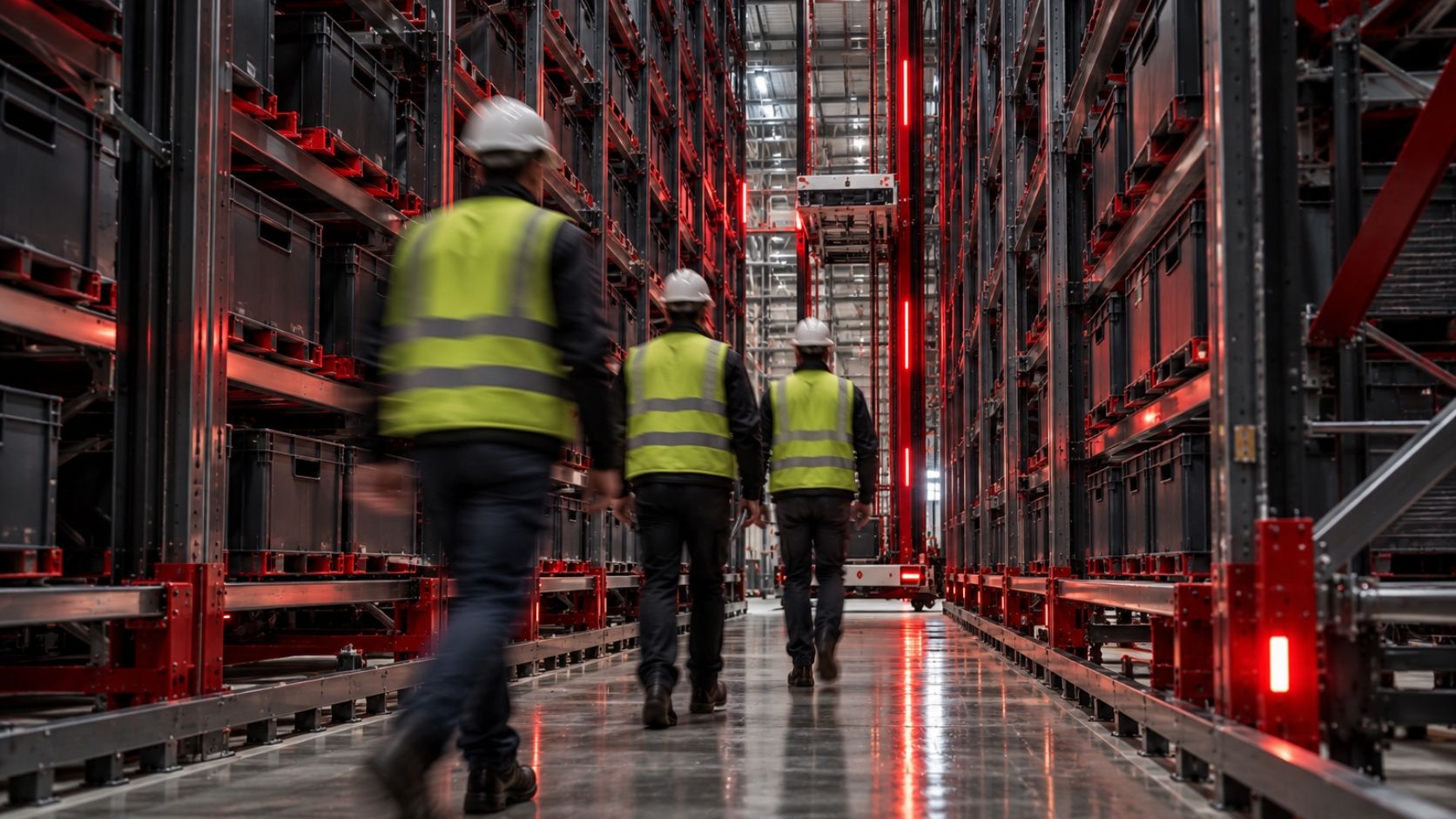
Pallet Movement: AGV Forklifts vs Shuttles Inside the Rack
Aisles as storage instead of travel space
An AGV forklift or autonomous pallet truck removes driver hours from a layout you already have. The selective racking stays, and so do the aisles wide enough for a truck to turn and lift. A pallet shuttle system inverts that logic: the shuttle lives in the lane, carries pallets inside the rack, and the aisle you were reserving for vehicle travel becomes stored pallets. The vehicle no longer needs the building; it needs the rail.
Lane depth, SKU count and rotation rules
Lanes commonly run from a few metres to well beyond twenty, loaded from one face for LIFO or through-flow from opposite faces for strict FIFO inventory rotation. Deep lanes reward few SKUs with many pallets each. Break the same volume into hundreds of SKUs and lane depth works against you, because a part-filled lane is wasted cube. The shuttle travels only within the rack while a lift or transfer car moves it between levels, which keeps each motion short and predictable.
Cold and harsh environments
Low-temperature cold store duty favours rack-bound equipment, since no operator sits in the cold and the footprint shrinks the volume you refrigerate. Where pallets must reach machines, production lines or docks spread across a building, AGV forklifts remain the better answer.
When AGVs or AMRs Are Genuinely the Better Answer
A rack grid is a density instrument. When the constraint is distance rather than density, it is the wrong tool, and no amount of shuttle throughput fixes that.
Transport distance, not storage density
Long point-to-point moves between buildings, across yards or along production spines are won by vehicles that travel. Floor robots scale by adding units to a route; a grid cannot be stretched down a corridor.
Leased space, low ceilings and short horizons
- Tenancy shorter than the payback period on fixed steel
- Clear height too low to convert into vertical storage
- Floor flatness or slab loading that will not carry rack-mounted equipment
Line-side and machine-tending work
- Feeding workstations, presses and packing lines on cycle
- Mixed-traffic aisles where people, forklifts and robots share space, which is where safety standards for AMRs matter most
- Processes that change layout several times a year
Incremental budgets
- Capital released in stages, with two or three robots added at a time
- SKU profiles too volatile to slot with any confidence
- Low-volume flows that will never fill a grid or justify its fixed cost
Common Questions on AGVs, AMRs and In-Rack Systems
1. Is an AMR always better than an AGV?
No. Where the route is fixed, the floor is clean and traffic is predictable, a guided vehicle on a defined path is simpler to commission and cheaper to maintain. Free navigation earns its premium only when layouts change or paths are genuinely shared with people and trucks.
2. Can AGVs, AMRs and in-rack shuttles run in the same building?
Routinely, and most mature sites do. The practical constraint is not the hardware but the software boundary: each fleet needs a clear handover point and one system holding inventory truth, usually the WMS or warehouse execution system.
3. Which needs the least change to my existing racking?
Mobile robots. They work around what you have. In-rack systems require rack built to shuttle tolerances, which is why they usually accompany a new build or a full reconfiguration.
4. Which is cheaper to start, and cheaper per unit at volume?
Mobile fleets start cheaper because you buy capacity in small increments. In-rack architecture front-loads the structure, then moves each unit at lower marginal cost as throughput rises.
Choose by Constraint, Not by Category
The technology categories matter less than the constraint they are fighting. If your binding limit is distance, changing layouts and uncertain volume, floor robots are the honest answer and the flexibility is worth the floor space they consume. If your binding limit is density and sustained picks inside a footprint you cannot expand, the rack grid is where the answer lives, because that is the only architecture that buys vertical capacity and throughput at the same time.
Whichever way you lean, model your peak hour rather than your daily average, and ask every vendor for throughput and density figures in writing, tied to your SKU profile. If you want a layout modelled against your own numbers, the HWArobotics team can work through it with you.