


Deep Lanes Without Blind Stock
Every storage decision is a trade between how much you can hold and how fast you can reach it. Selective racking gives you every pallet on demand, then spends a third or more of your floor on aisles to do it. Drive-in and push-back reclaim that floor by stacking pallets behind each other, and you pay in selectivity: lanes become single-SKU commitments, and stock at the back goes blind until the front clears. Shuttle racking breaks that logic by changing which machine enters the lane. The carrier travels inside the rack; the forklift stays at the face. This article settles three things: how the mechanism actually works, what it costs you in complexity and maintenance discipline, and the cases where drive-in or push-back remains the defensible choice.
How Shuttle Racking Works, Cycle by Cycle
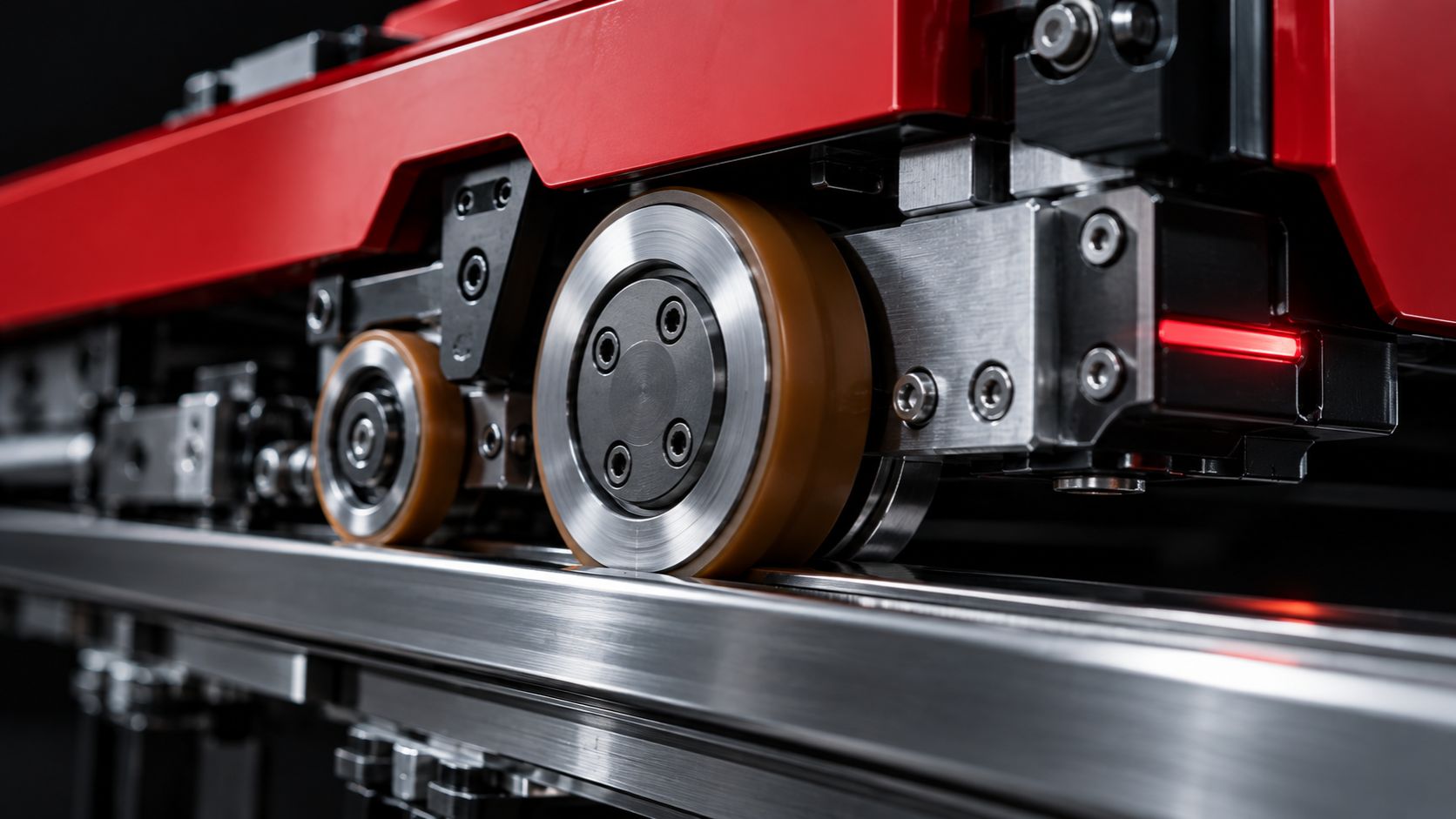
A pallet shuttle racking system pairs a battery-powered shuttle with rails built into each storage channel. The forklift lifts the shuttle between lanes and drops pallets at the lane mouth only. The shuttle then runs the pallet into the channel, positions it against the last load, and returns to the entry point to wait for the next one.
What happens on a put-away cycle
The operator places the shuttle in the target lane rails, then deposits a pallet across the entry rails. The shuttle drives underneath, raises its lifting deck, carries the load to the first free position, lowers, and reverses to the mouth. The truck is already turning toward the next pick face while that travel happens, which is where the cycle time gain comes from.
What happens on a retrieval cycle
The command reverses. The shuttle travels empty to the nearest pallet, lifts, returns to the mouth, and sets the load down within fork reach. Channels commonly run from roughly 6 m to 40 m deep. Control is by handheld remote in semi-automated builds, or by warehouse control system in fully automated lines.
Why the forklift stays out of the lane
No mast enters the structure, so upright strikes, rail damage and driver exposure to deep, dark channels all fall away.
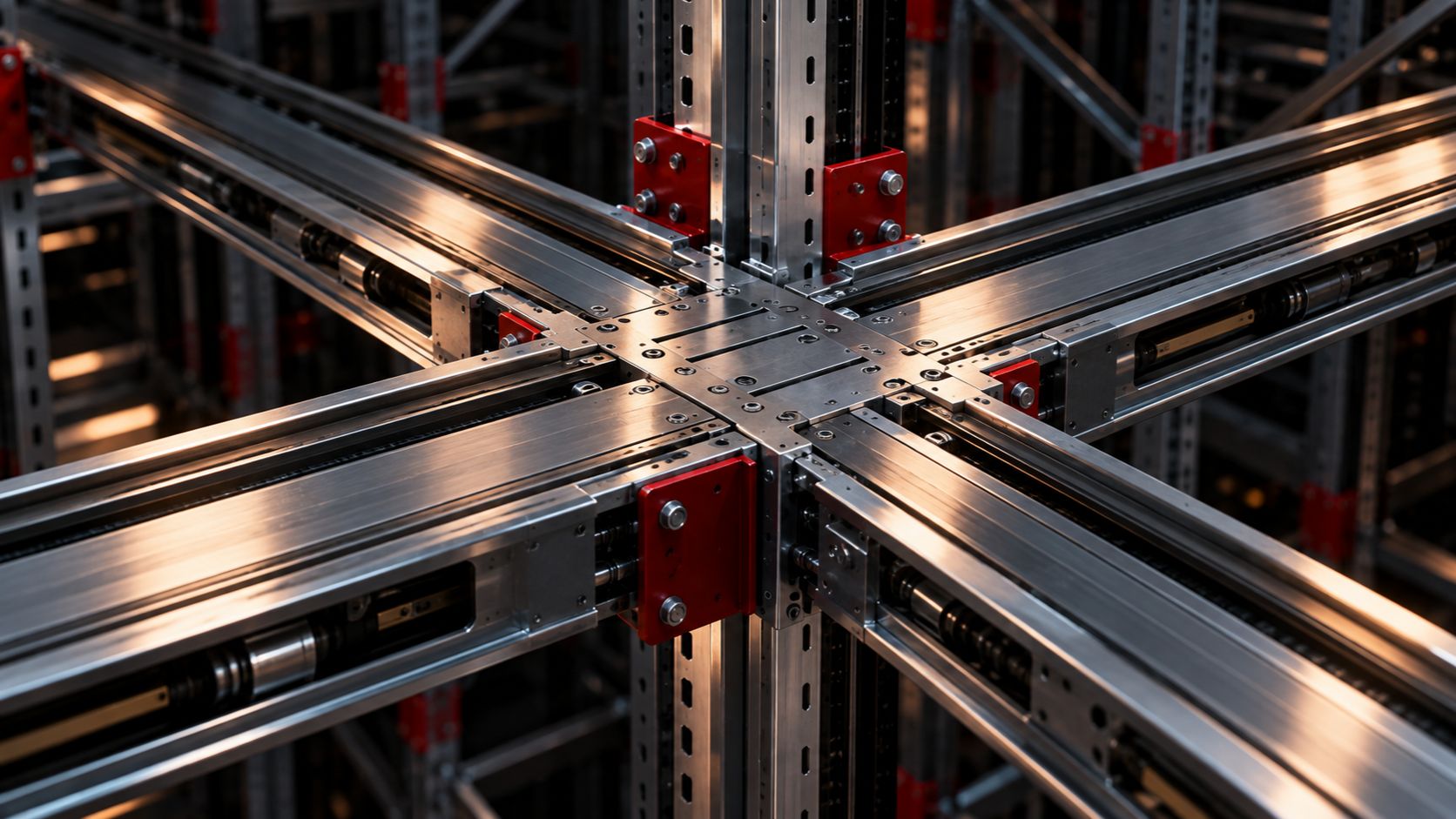
What Makes Up a Shuttle Rack System
A shuttle rack system is a small parts list with tight interdependencies. Change one component and you constrain the others.
- Rails and frame: the shuttle rides on rolled or extruded guide rails welded into the lane, and the frame carries both pallet load and shuttle weight. Rail straightness and level tolerance across the lane length matter more than beam capacity here.
- The shuttle: payload rating, lifting deck stroke and battery chemistry set the operating envelope. Opportunity charging at a lane-end or aisle-end contact point keeps units working across shifts instead of swapping packs.
- Charging point: position it where the forklift already travels, or you build waiting time into every cycle.
- Control layer: a handheld remote suits single-lane semi-automated work. A tablet or warehouse control system adds sequencing, lane occupancy tracking and FIFO enforcement.
- Lift and transfer car: in fully automated builds these remove the forklift from the loop entirely.
Rails, frame and pallet tolerance
Damaged or out-of-spec pallets cause most shuttle faults, not the electronics. Audit pallet quality before you audit the supplier.
The shuttle: payload, battery and charging
Match payload to your heaviest real pallet, not your average.
Single-direction versus 4-way shuttles
Single-direction units stay in one lane and need a forklift to relocate. A 4-way pallet shuttle system changes direction inside the grid, so one unit serves multiple lanes and levels.
Remote control versus WCS control
Remotes are cheaper. WCS control gives you the inventory accuracy that justifies the density.
Shuttle, Drive-In and Push-Back Side by Side
The three high density options behave very differently once lanes get long. This comparison isolates the variables that decide which one survives your SKU profile and pallet quality.
| Criterion | Shuttle racking | Drive-in racking | Push-back racking |
|---|---|---|---|
| Practical lane depth | Deep, dozens of pallets | Shallow to moderate, limited by forklift reach and driver confidence | Short, typically a handful of pallets on inclined rails |
| Stock rotation | FIFO or LIFO, selectable per lane | LIFO only | LIFO only |
| Selectivity | One SKU per lane, many lanes per level | One SKU per lane, fewer lanes for the same footprint | One SKU per lane, high lane count but low depth |
| Forklift entry into lane | None, truck stays in the aisle | Required for every pallet | None |
| Throughput as lanes deepen | Holds up, shuttle travel replaces truck travel | Degrades sharply with each extra position | Not applicable beyond short depths |
| Sensitivity to pallet quality | High, damaged stringers stall cycles | Moderate | Moderate to high on rail alignment |
Read the table as a trade curve, not a ranking. Drive-in buys density with driver time and rack damage. Push-back buys speed by giving up depth. Shuttle racking is the only option here that keeps throughput flat as lanes lengthen, and the price of that is discipline around pallet condition.
Density and Throughput: In-Rack Shuttles Versus Drive-In and Push-Back
Why drive-in density rarely survives contact with operations
On a layout drawing, drive-in racking looks like the densest option available. In operation it leaks. Because each lane is committed to one SKU and one date code, partially emptied lanes sit as honeycombed voids that cannot be refilled without breaking inventory discipline. The second loss is speed. A truck entering a lane travels between rails with load-bearing frames on both sides, so operators slow down, and every additional pallet of depth adds travel and risk to the same forklift cycle. Deeper lanes therefore buy density at a direct cost in throughput and rack damage exposure.
Why push-back depth stops at the cart nest
Push-back solves the entry problem by keeping the truck at the face, but the nested cart assembly imposes its own ceiling, typically around two to six pallets deep. Beyond that, the stacked carts and rail gradient stop being practical. Push-back gains selectivity per lane and loses the option of deep storage entirely.
What changes when the carrier goes in instead of the truck
In a shuttle pallet racking lane, the carrier absorbs in-lane travel, so depth can grow without lengthening the forklift cycle at the face. Be clear about the trade: shuttle cycle time inside the lane still rises with depth, and one shuttle serves one lane at a time, which makes shuttle-to-lane ratio and pallet flow sequencing the real throughput levers.
When Drive-In or Push-Back Is Genuinely the Better Buy
When drive-in is the cheaper honest answer
Drive-in wins on capital cost per pallet position and on simplicity. There is no battery, no charger, no controller and no spare parts list. For slow-moving single-SKU stock, seasonal buffers, packaging, or raw material held for weeks, that matters more than cycle times. Sites without an in-house maintenance function, or with no realistic path to preventive maintenance discipline, are better served by structure that cannot fail electronically.
When push-back fits the SKU profile better
At two to five deep with multiple SKUs, push-back racking delivers respectable density with no powered equipment in the lane. The forklift never enters the rack, cycles stay short at the aisle face, and each lane holds its own SKU. For medium-turnover stock across many SKUs at modest depth, the economics are hard to beat.
Signals that shuttle racking will not pay back
Reconsider when lane counts are small enough that one shuttle sits idle most of the shift, when daily pallet movements are low, when the lease is short, or when floor flatness and pallet quality cannot be corrected. Shuttles amplify good conditions and punish bad ones.
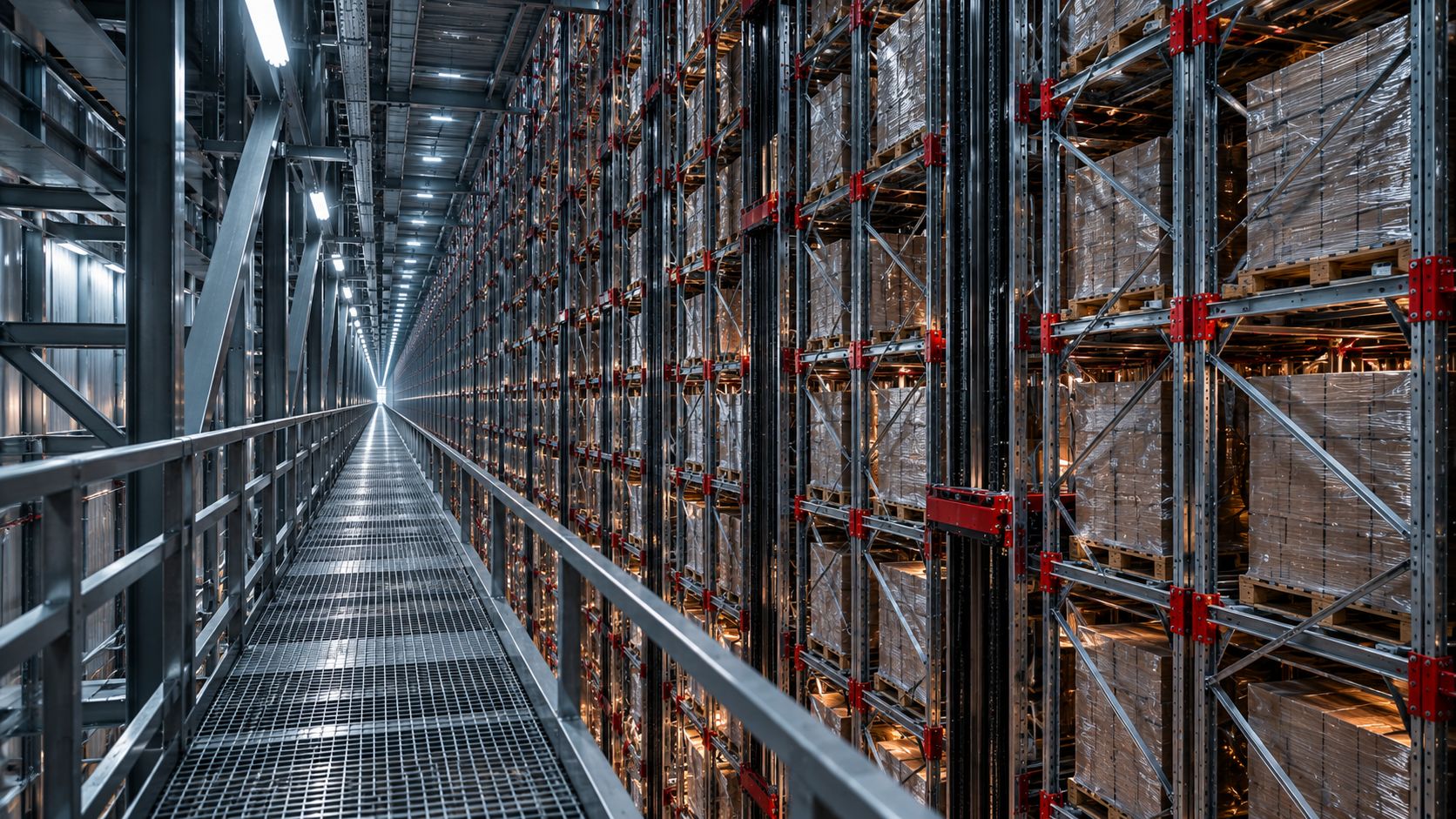
Sizing a Shuttle Installation: Depth, Rotation and Site Limits
Lane depth, shuttle count and pallets per hour
Throughput is set by the slowest element in the chain, and in most layouts that is the forklift or transfer car feeding the lane mouths, not the shuttle. Deeper lanes raise storage density but lengthen the shuttle’s travel per pallet, so pallets per hour per lane falls as depth grows. The counter is more lane faces and more shuttles per aisle. Model the SKU rotation first: fast movers belong in shallower lanes, slow movers absorb the depth.
FIFO channels versus LIFO channels
A LIFO channel is loaded and unloaded from one face, so a single aisle serves it. A FIFO channel loads at one end and discharges at the other, which means two aisles, two sets of docks and a different building footprint entirely. Decide this before drawing the grid, because retrofitting flow direction into an existing high density racking layout is rarely economic.
Site conditions to verify before you order
- Floor flatness and joint condition along every lane run, checked against floor flatness standards
- Positioning tolerance achievable in millimetres at the lane mouth
- Pallet grade, base board condition and permitted overhang
- Payload rating in kilograms, including worst-case pallet weight
- Temperature range, including chilled and frozen duty down to roughly -25 degrees Celsius
These checks decide whether your high density storage plan survives commissioning.
Operations That Suit Shuttle Lanes
The architecture pays for itself where lane depth is filled repeatedly by the same article number. High volume across a narrow SKU count is the core condition. Everything else, temperature, rotation rules, client churn, changes how strongly the case stacks up.
Cold and frozen storage
Refrigerated cubic metres carry a running cost that ambient space does not, so compressing the same pallet count into fewer metres directly reduces the volume you chill. Shuttles also keep operators out of the cold aisle for most of the cycle, which removes the productivity penalty and break requirements that come with sub-zero picking. Our broader notes on cold storage automation cover the equipment specification side.
Food, beverage and date-code rotation
Batch production fills lanes quickly and FEFO stock rotation rules demand that the system knows which batch sits where. Lane-level control gives you that without splitting production runs across scattered locations.
Contract logistics and production buffers
3PL buffer zones can be re-depthed as contracts change. Manufacturing buffers feed lines at a predictable rate. Broad slow-moving tails stay in selective racking, where a single pallet does not justify a lane.
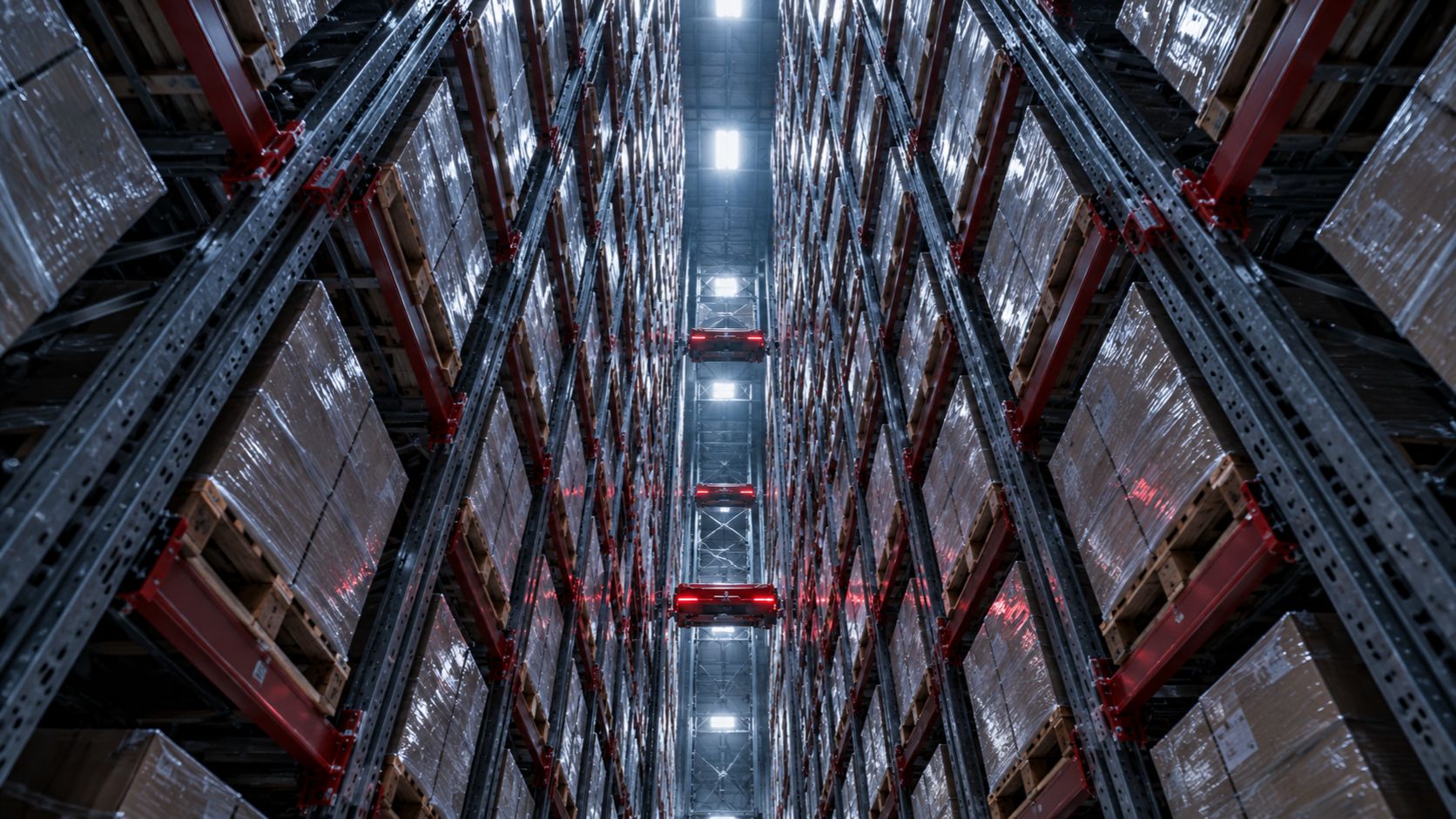
Questions Planners Ask Before Committing
1. How deep can a shuttle lane realistically go?
Lane depth is limited by rotation and rack engineering, not by the shuttle. Deeper lanes cut aisle count but lengthen the shuttle’s travel per pallet, so throughput per lane falls as depth rises. Match depth to SKU volume rather than pushing to the structural maximum.
2. Can one shuttle serve several lanes, and how is it moved between them?
Yes. A single shuttle typically covers many lanes on one level, carried between them by the forklift forks or by a transfer car. Fewer shuttles lowers capital cost but makes shuttle relocation the pacing constraint on cycles.
3. Does shuttle racking need a WMS or WCS, or will a handheld remote do?
Semi-automated lanes run on a handheld remote with the operator sequencing moves. Once you add lifts, transfer cars or FIFO discipline across many lanes, warehouse control software becomes necessary to manage rotation and deadlocks.
4. What maintenance does a shuttle need compared with drive-in racking?
Drive-in racking needs frame inspection and impact repair. Shuttles add battery care, wheel and chain checks, and sensor cleaning, but they remove most forklift-to-rack collisions that drive drive-in repair spend.
Choosing on Movements, Not on Cubic Metres Alone
Cubic metres gained is the easiest number to put in a business case and the least useful on its own. Shuttle racking earns its extra equipment cost only where deep lanes and high daily pallet movements coincide, because the shuttle pays for itself in cycles, not in stored volume. Where lanes turn slowly, hold few SKUs and see modest daily throughput, drive-in or push-back remain the rational buy, and saying so has cost us nothing. The line sits where handling time, not floor area, becomes the constraint on your operation.
If you want that line drawn against your own numbers, send us your lane counts, SKU profile, daily pallet movements and operating temperature range, and we will work through the sizing with you.