Archive for 5 月, 2024

Types of Pallet Shuttle Systems: How to Choose?

星期四, 9 5 月, 2024

In the fast-paced world of warehousing and logistics, efficiency and space optimization are important. The pallet shuttle system is one creative fix that has gained appeal. This modern technology provides an organized system for storing and retrieving, increasing efficiency and reducing operating costs.

This blog will guide you into the pallet shuttle systems world, explaining the different types and supporting you to make an optimal decision when it comes to choosing the right system for your specific needs.
(Copyright image from Freepik)


△Understanding Pallet Shuttle Systems

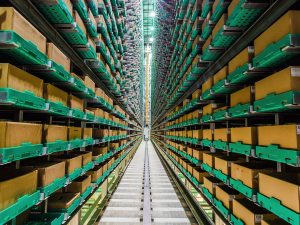
The pallet shuttle system is a semi-automated storage solution used to enhance the efficiency of the warehouse. It is made up of dedicated shuttle robots that move and store pallets inside a racking system. These robots work in conjunction with forklifts or stacker cranes to efficiently move pallets in and out of storage position.

The main purpose of a pallet shuttle robot is to improve space utilization and raise storage capacity. With the absence of aisles between racks, these systems use the vertical space effectively. In addition, they improved inventory control by offering real time status and accelerated picking operations of products.


▲Features and Benefits Of Pallet Shuttle Systems

Pallet shuttle systems provide a variety of features and advantages, which makes them the most popular in the industry. Some key features and benefits include:

☞High Speed and Efficiency: The shuttle robots run at high speeds, enabling fast pallet handling and reducing waiting times.

☞Reduced Labor Costs: Pallet shuttle systems eliminate the need to be manually carried out by automating the storage and retrieval process, which translates to cost savings for businesses.

☞Improved Safety: The substitution of forklifts with shuttle robots in the warehouse considerably lowers the risk of accidents and injuries.

☞Flexibility:These systems are easily adaptable to the existing structures of racking, which makes them a flexible solution for different warehouse environments.

☛Scalability:Storage systems can be scaled or adjusted to meet future storage requirements and business growth.
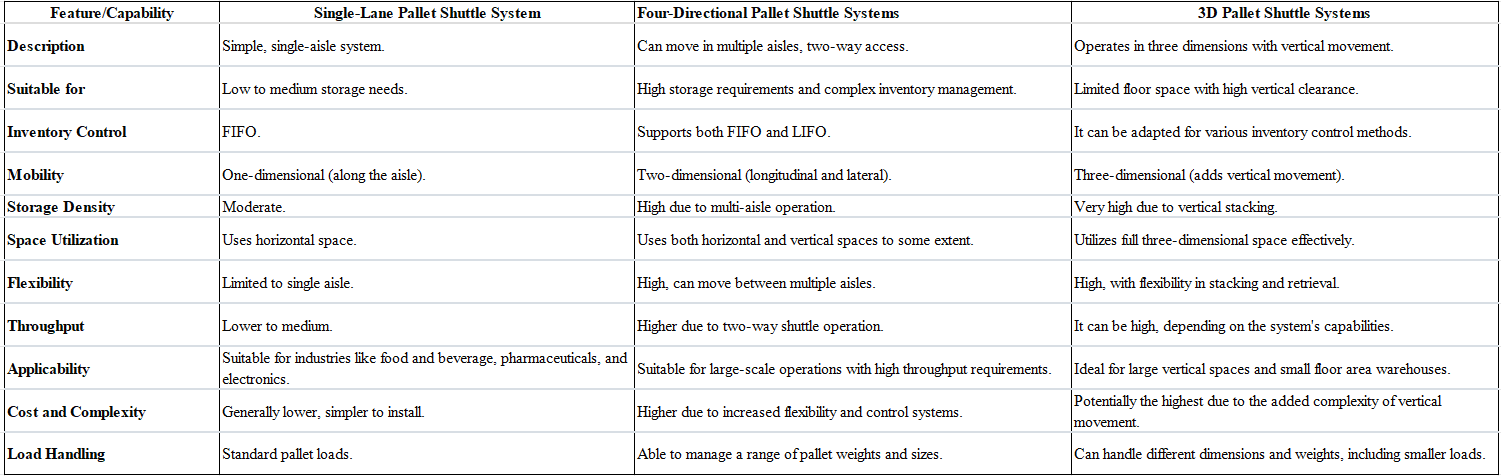
 

△What are the Different Types of Pallet Shuttle Systems?

Pallet shuttle systems come from various types of working mechanisms, significant applications, advantages, and considerations. Let’s explore the three main types in detail:

△When to Choose Pallet Shuttle Systems?

There are many advantages that shuttle pallet racking systems provide, which makes them a suitable option for different warehouse environments. Let’s explore some scenarios where choosing a pallet shuttle racking system would be advantageous:

▲High-volume Storage and Retrieval

Pallet shuttles systems are especially advantageous for warehouses that handle large amounts of inventory. This system is automated; therefore, storage and retrieval are done quicker, handling time is minimized, and overall effectiveness is better.

▲High-Density Storage in a Constrained Area

When the floor space of your warehouse is constrained, the pallet shuttle systems can help in maximizing the storage capacity. These systems make use of vertical space and do away with aisles, allowing for even denser storage without impairing accessibility.

▲Cold Storage Facilities

Cold storage systems need special storage methods that can bear low temperatures. These types of systems are intended to work in these kinds of environments and, thus, are perfect for cold storage facilities.

▲Real-Time Inventory Visibility

Pallet shuttle systems offer real-time visibility so that you can track and manage your stock accurately and effectively. This functionality is extremely important for those warehouses, which work with perishable or time-sensitive goods.

△Navigating Challenges of Implementing Pallet Shuttle Systems

Pallet shuttle systems offer efficient and high-density storage solutions in warehouses, but like any technology, they come with their own set of challenges. Here are some common issues associated with pallet shuttles and strategies for navigating them.


▲Limited Pallet Weight and Size

  • Select pallet shuttle systems with higher capacity:Assess the weight and size restrictions of your pallets and select a shuttle system that can handle them. If you often have to handle heavy pallet loads, consider shuttle systems with higher weight capacities.
  • Optimize pallet design:You should think about refining or optimizing your pallets so that they provide the maximum utilization of space, weigh the least, and still satisfy your product storage needs. This can improve the operational effectiveness of your shuttle system.

▲Compatibility with Existing Infrastructure

  • Assess existing infrastructure and modification needs:Evaluate your current warehouse layout, including rack configurations and aisle dimensions, to determine the compatibility of pallet shuttle systems. Identify any necessary modifications or adjustments required to integrate shuttle systems seamlessly.
  • Integrate shuttles with traditional pallet racking systems: If you have existing pallet racking systems in place, explore options for integrating shuttle systems into your setup. This may involve retrofitting racks or implementing hybrid solutions that combine traditional racks with shuttle technology.

By addressing these challenges effectively, you can make informed decisions about when to choose pallet shuttle systems and ensure smooth implementation within your warehouse operations.


△HWArobotics: Quality Pallet Shuttle Systems and Solutions Provider

HWArobotics’ pallet robots offer an innovative solution for optimizing warehouse operations.

▲FPSS1500A: Four-Directional Pallet Shuttle System for Room Temperature Environment


The FPSS1500A is an all-electric, four-directional shuttle system that stands out for its:

  • European Quality Components: Ensuring top-tier performance and reliability.
  • AI-Powered Efficiency: With swarm intelligence and AI scheduling for optimal operational efficiency.
  • Speedy Delivery: Commitment to delivering within 100 days post-contract.
  • Global Standard Compliance: Holding CE and UL certifications for safety and quality assurance.

This system is ideal for industries such as food and beverage, tobacco, and industrial manufacturing, where case picking in room temperature conditions is prevalent.

▲FPSS1500B: Four-Directional Pallet Shuttle System for Low Temperature Environment


The FPSS1500B is tailored for cold storage environments, capable of operating seamlessly at -25°C. It offers:

  • European Series Parts: Guaranteeing high-quality performance even in low temperatures.
  • All-Electric Drive: For precise control and reduced environmental impact.
  • Rapid Deployment: Aiming to deliver and install within 100 days to minimize downtime.
  • High-Reliability Standards: Maintaining the highest standards to ensure minimal failures.

Perfect for cold chain logistics, the FPSS1500B serves food, medicine, and other cold storage businesses that require automated storage and retrieval in low-temperature settings.

HWArobotics’ FPSS1500A and FPSS1500B are designed to meet the specific needs of room temperature and cold storage environments, respectively. With their advanced features and the benefits they provide, these systems are a smart choice for businesses looking to enhance warehouse efficiency and reduce operational costs.

Learn more about HWArobotics to see how we can help you revolutionize your warehousing operations.

You may also want to read:

▷How Do Pallet Shuttle Robot Systems Improve Fresh Food Logistics Efficiency?

▷AS/RS Pallet Shuttle System for Changing Food and Beverage Logistics Needs

(更多…)

Challenges in ASRS Implementation: How Do We Navigate Them?

星期四, 9 5 月, 2024

ASRS has revolutionized the way warehouses work. With the increased cost of real estate and human labor, Automated Storage and Retrieval Systems (ASRS) allow for storing more items in a smaller footprint with less labor cost and higher efficiency.

Yet, it comes with its own set of challenges. These include high initial costs, space constraints, system complexity, integration with existing infrastructure, and the need for skilled personnel. Therefore, this blog will talk about taking a strategic approach to navigating these obstacles. Dive into the chapters below to find out how to do that!

△Why is ASRS Important?

▲What is ASRS?

Automated Storage and Retrieval Systems refer to a modern technology that enables automatic material handling in a warehouse. It utilizes computer-managed machines and software systems to move products between storage locations and picking areas through a system of storage racks, conveyors, and robotic cranes.

▲What are the Benefits of ASRS?

  • ASRS (Automated Storage and Retrieval Systems) speeds up picking, packing, and storing tasks, saving time and resources.
  • It maximizes vertical space, which is ideal for warehouses with limited square footage.
  • It minimizes human errors in inventory management, leading to more accurate order fulfillment.
  • It reduces the risk of accidents by automating heavy lifting and navigating hazardous areas.
  • It provides valuable data on inventory movement, aiding in better decision-making and forecasting.

▲Is AS/RS Right for You?

①Volume Increases:If your inventory levels are growing rapidly, AS/RS can handle higher volumes efficiently.

②Space Constraints:When floor space is at a premium, AS/RS can utilize vertical space effectively.

③Accuracy Issues:If manual processes lead to frequent errors in inventory management, automation can improve accuracy.

④Labor Costs:When labor costs are high or difficult to manage, AS/RS can provide a cost-effective alternative.

⑤Order Fulfillment Speed:If you need to fulfill orders quickly and accurately, AS/RS can expedite the process.

⑥Employee Productivity:AS/RS frees up your employees to work on more valuable activities by relieving them of repetitive tasks.


△Understanding ASRS Implementation Challenges

There are some challenges to ASRS implementation in a warehouse. These challenges must be considered, and solutions must be developed to handle them appropriately.

▲Miscellaneous ASRS Options

An implementation challenge of ASRS is to pick a system that will be effective for the warehouse. There are many ASRS choices, each designed with different storage and retrieval mechanisms and sizes and weight ranges. It is important to critically assess the available alternatives and opt for the one that suits the specific requirements of your warehouse.

▲Complex ASRS Systems Integration

The integration of ASRS within the current warehouse systems can be quite challenging. ASRS depends on the integration of software, hardware, and mechanical components. Smooth integration of automated retrieval systems with the existing operations with minimal interruption calls for careful coordination through proper planning between the ASRS vendor and internal IT teams.

▲High Initial Investment

The high cost of the initial investment is one of the main problems that arise in the implementation of ASRS. ASRS systems require the installation of automated machinery, as well as alterations to infrastructure and software integration, all of which are expensive.

▲Staff Training and Adoption

ASRS warehouse will involve training the personnel to operate under the new system. This may be a problem, particularly for workers used to old-fashioned manual systems. Giving full training and support to the staff is essential to have a successful transfer and to benefit from the ASRS.

▲Limited Flexibility for Variable Operations

ASRS systems are supposed to work in an optimum manner under certain conditions. They may not be able to adapt to variable operations or sudden demand changes. It is important to consider the operational requirements of the warehouse and to determine whether the selected ASRS system can easily adjust to varying situations.

▲Machine Maintenance and Repair

ASRS systems are complex machinery and equipment that should be maintained regularly and repaired when necessary. The availability of qualified technicians and a good maintenance program are necessary to reduce downtime and increase system uptime.


△Best Practices to Ensure a Successful ASRS RollOut

Successful implementation of ASRS requires planning and execution. Best practices will help warehouses overcome the challenges and facilitate a seamless launching of the system.

▲Conduct a Thorough Analysis of ROI

Run a thorough return on investment (ROI) analysis before implementing ASRS to evaluate the system’s financial and non-financial benefits. Consider elements such as savings on labor costs, increased accuracy, and additional storage space.

▲Choose the Right ASRS technology.

Pick the ASRS technology most appropriate for your particular needs and demands. Evaluate aspects such as the category of products, order quantity, and warehouse design. Talking to the ASRS suppliers and experts will help in deciding.

▲Coordinate with ASRS Vendors on System Design

Work closely with professional ASRS vendors with systematic competence to customize a system for your warehouse’s needs. Ensure that the system design is seamless with the current warehouse systems and processes.

▲Prepare Equipment and Staff for ASRS Testing

Before the actual implementation, stage equipment and train staff for testing and trial runs. It will enable the discovery of any problems or modifications required prior to the full implementation.

▲Create a Robust ASRS Deployment Schedule

Develop a deployment schedule that allows for seamless integration of the ASRS system with minimal disruption to warehouse operations. Plan for contingencies and allocate sufficient time for testing, training, and troubleshooting.

▲Prepare Acceptance Test Strategies and Contingency Plans

Establish acceptance test strategies to ensure that the ASRS system meets the desired performance criteria. Additionally, develop contingency plans to address any unforeseen obstacles or challenges that may arise during the implementation process.

▲Implement Acceptance Test

Perform the acceptance test to validate that the ASRS system performs correctly. Evaluate process, quality, and system reliability during this stage.

▲Review and Adjust

Monitor the performance of the ASRS system post-implementation and modify it when required to enhance its efficiency and address any issues that may occur. The ongoing enhancement and supervision are the main factors in the pursuit of the most benefits from ASRS.


△HWArobotics: Your Experienced and Professional ASRS Provider

HWArobotics is a highly recommended supplier with extensive project experience in implementing Automated Storage and Retrieval Systems (ASRS). Our mini-load and pallet-load ASRS solutions are designed to specifically address the requirements of companies that handle pallets or small-sized goods in distribution centers or warehouses.

The Tote Shuttle Robot System, part of HWA Robotics’ ASRS offerings, automates the storage and retrieval process for small items or components. It consists of four major case-handling ASRS shuttle product lines, SLS300, SLS400, SLS500, and SLS600, for different product sizes and storage unit layouts. These systems streamline operations, reduce labor costs, and improve overall productivity.

Additionally, HWA Robotics offers the Pallet Shuttle Robot System, an advanced ASRS solution designed for the efficient handling and storage of pallets in warehouses or distribution centers. This system utilizes a specialized shuttle device that can move in four directions within the racking structure. Two major ASRS pallet shuttle product lines, FPSS1500A and FPSS1500B, can accommodate both room and cold temperature operations.

Overall, HWA Robotics’ solutions offer comprehensive automation for storage and retrieval processes, providing businesses with improved efficiency and cost savings.

You may also want to read more on ASRS implementation in the warehouse:

How to Enhance the Efficiency of E-Commerce Warehouse?

Buyer’s Guide: Single-Layer VS Double-Layer Sorting Station


△Conclusion

In conclusion, there are many advantages to installing ASRS in a warehouse, but there are drawbacks as well.  By understanding these challenges and following best practices, organizations can navigate the complexities of ASRS implementation and achieve a successful rollout. Partnering with an experienced supplier like HWArobotics can further enhance the chances of a seamless and efficient implementation. Thus, if you’re thinking of using ASRS in your warehouse, make sure everything is in place for a seamless transition and enjoy the benefits of this cutting-edge technology.